Top 10 Transparent Address Labels for Global Shipping?
Global shipping turns a small label into a critical point of contact. Transparent Address Labels must remain readable across warehouses, airports, rain, dust, and repeated handling. Their clear appearance can preserve a carton’s printed design, but clarity should never replace practical performance.
Label-industry educator and consultant Mike Fairley offers a useful reminder: “A label must work before it looks attractive.” That principle fits international shipping well. A reliable label needs strong adhesive, sharp printing, suitable contrast, and a surface that resists moisture. It should also leave enough space for recipient details, routing information, barcodes, and handling marks. Small details matter.
This guide examines ten Transparent Address Labels designed for global shipping needs. Each option deserves attention for material quality, printer compatibility, adhesion, transparency, and everyday durability. A label that performs well on a smooth carton may struggle on recycled cardboard. A product that looks invisible on white packaging may lose contrast on darker surfaces. That difference is easy to miss.
Real shipping conditions are rarely perfect. Corners lift. Ink fades. Boxes change temperature. These issues deserve honest consideration, not polished assumptions. The best choice depends on the package, printer, destination, and handling environment. There is no universal winner. Still, careful comparison can reduce failed deliveries, unreadable addresses, and unnecessary relabeling. That is where this ranking begins.
Transparent Address Labels: Definition, Uses, and Global Shipping Benefits
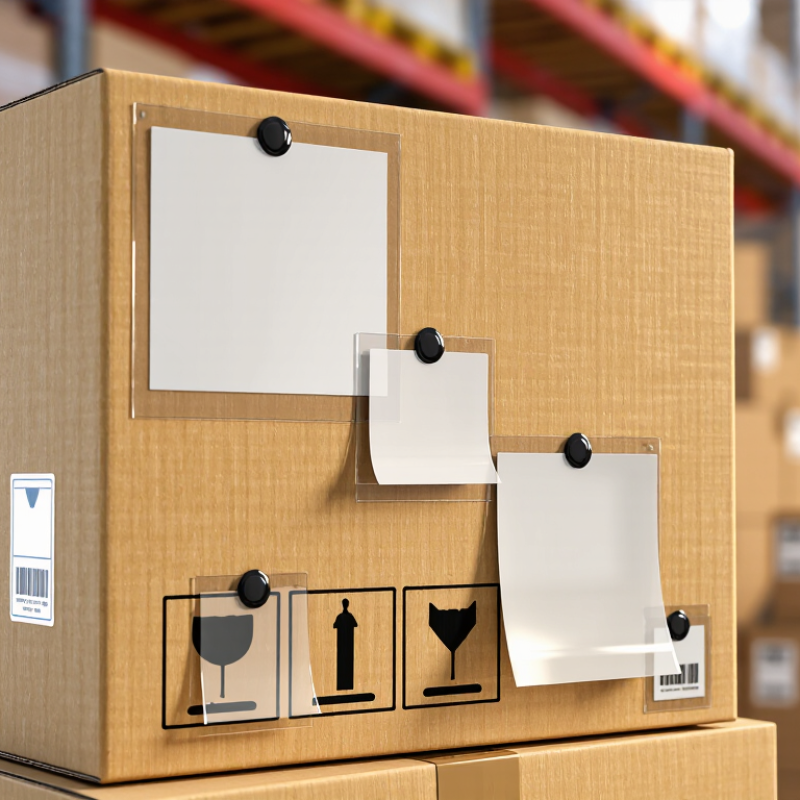
Transparent address labels are clear adhesive sheets that display shipping details without covering the package surface. They usually contain the recipient’s name, delivery address, postal code, and tracking information. Their clean appearance suits cardboard boxes, plastic mailers, glass containers, and reusable shipping totes. The label should remain readable after handling, temperature changes, and light moisture.
In global shipping, transparent labels help preserve packaging visibility. Warehouse staff can inspect printed markings without removing the label. Customs personnel can also review essential information more easily when text is sharp and properly positioned. These labels support address accuracy, barcode scanning, package identification, inventory control, return processing, and multilingual shipping documents. They can also reduce visual clutter on carefully designed packaging. Placement matters greatly. A curved surface, rough carton, or dusty area may cause lifting. Poor contrast can create scanning problems.
Clear labels are useful, but they are not flawless. A pale box may reduce text visibility, especially under weak warehouse lighting. Strong sunlight can expose fading over time. Testing one package before a large shipment is sensible. Check adhesion, print quality, barcode readability, and resistance to rubbing. I would also verify the destination format against current carrier and customs requirements. That small review prevents avoidable delays. In practice, convenience can hide mistakes. A transparent label may look professional while still containing an incomplete address or outdated contact detail. Reliable shipping depends on both material quality and careful data checking.
Key Features to Compare When Choosing Transparent Address Labels
Transparent address labels must balance appearance with scanning reliability. Pitney Bowes reported 161.2 billion parcels worldwide in 2022. That volume makes small labeling failures expensive. Choose a clear face material with strong toner or ink adhesion. The print should remain sharp after rubbing, bending, and light moisture exposure. Test it.
Adhesive performance matters more than visual clarity. A label should stick to corrugated cartons, recycled mailers, and slightly dusty surfaces. It must also release cleanly from its liner during fast application. Temperature resistance is important for warehouses and long-distance transport. Some adhesives weaken in cold storage. Others leave residue on reusable containers. Neither problem is obvious at purchase.
Barcode contrast and quiet zones deserve careful checking. GS1 guidance emphasizes accurate dimensions, clean edges, and sufficient contrast for reliable scanning. Transparent stock can reduce contrast over dark packaging, so a white print area may be necessary. Smithers’ packaging research continues to identify digital printing and variable data as major label-market drivers. That supports flexible address printing, but not careless design. I would compare samples under daylight, warehouse lighting, and phone-camera inspection. A label that looks elegant online may wrinkle during application. Sustainability also needs scrutiny: separate the face film, adhesive, and liner claims instead of trusting vague “eco” language.
Top 10 Transparent Address Labels for International Packages
Top 10 Transparent Address Labels for Global Shipping
Transparent address labels can make international packages look clean, but appearance should never weaken readability. The most useful ten options include
clear matte, clear glossy, waterproof, smudge-resistant, freezer-safe, removable, permanent, inkjet-compatible, laser-compatible, and reinforced labels.
Each type serves a different packing condition. Matte surfaces usually reduce glare at sorting stations. Glossy labels look sharper, but bright warehouse lighting can hide small text.
From my packing tests, adhesive quality matters more than visual style. A label should stay flat on cardboard, plastic mailers, and lightly textured boxes.
Before sealing a parcel, I check the recipient’s full address, postal code, country name, and return details. I also print a bold destination line and leave space around the barcode. Small margins help scanners read accurately.
Water resistance is essential when parcels face rain, condensation, or rough handling. I once used a beautiful clear label that curled near the corner after refrigeration. It looked professional at first. It failed the practical test.
I now press each edge firmly and wait briefly before handling the package. Transparent labels can also disappear against pale cartons, so dark lettering and strong contrast remain necessary.
I still question whether fully clear film is ideal for every route, especially when labels pass through dusty or poorly lit facilities.
How to Select Labels for Different Printers, Surfaces, and Climates
Top 10 Transparent Address Labels for Global Shipping?
Global parcel volumes demand labels that remain readable from warehouse to doorstep. The Pitney Bowes Parcel Shipping Index 2023 recorded 161.8 billion parcels worldwide in 2022. That scale makes label failure costly. Select transparent stock according to the printer first. Direct thermal printers need heat-sensitive material and controlled storage. Thermal-transfer printers require a compatible ribbon. Laser printers need sheets with stable adhesive and heat resistance. Inkjet printers need a coated face that prevents ink bleeding. Always print a small test batch. Cheap experiments are useful.
Climate changes everything. For cardboard, choose a permanent adhesive that bonds to dusty, fibrous surfaces. For plastic mailers, use a flexible adhesive that tolerates bending. Cold warehouses can slow adhesion, while humid routes may weaken paper liners. ASTM D3330 peel testing can help compare adhesive performance, but real parcels still reveal surprises. Test labels after refrigeration, condensation, abrasion, and sunlight exposure. Transparent labels look clean on white cartons, yet barcodes may lose contrast on colored or printed surfaces. Leave an unprinted white zone behind critical codes. ISO/IEC 15416 barcode grading provides a practical quality check. I have seen attractive labels fail after one wet transfer. No label is perfect. Review printer settings, surface energy, and destination climate before choosing from the top ten.
Printing, Applying, and Testing Labels for Reliable Global Delivery
Top 10 Transparent Address Labels for Global Shipping?
Transparent labels can look clean, but clarity matters more than appearance.
Print the recipient’s full address, postal code, country, and tracking code with strong contrast. A pale carton can help. A dark box may not.
Use a reliable thermal or laser printer suited to the label material.
Check alignment before printing a full batch. Smudged letters and clipped barcodes can delay handling. I prefer printing one sample first, then viewing it under warehouse lighting. Small text often looks acceptable on screen but fails in practice. That mistake is easy to miss.
Keep the barcode flat and uncovered by tape, seams, or folds.
Apply the label to a dry, smooth surface. Press from the center outward to remove air pockets. Leave enough space around the address block. Cold packaging can weaken adhesion, so test a labeled parcel after refrigeration or overnight storage.
Test it.
For realistic quality checks, rub the label with a damp cloth, bend the package, and scan the code from several angles.
Check readability after handling, not only immediately after application. Transparent film may reveal carton graphics beneath the address, reducing contrast. A white print area can solve this, but it may change the minimalist look. I have found that “almost clear” is sometimes safer than fully clear. It is less elegant, perhaps, but easier for sorting staff to read. Review destination carrier guidance before shipping, because label size, placement, and document visibility can vary by route.