Leave Your Message

What Is a Barcode Roll and What Types Are Available?

A Barcode Roll may look like a simple coil of labels, but choosing the right one affects print quality, scanning, and daily workflow. A roll that fits the printer poorly can drift, wrinkle, or leave barcodes faint. The right choice starts with the label’s job.

In this illustrative draft, barcode-label specialist Daniel Mercer offers a practical reminder: “A barcode is only useful when the label prints clearly and stays readable where it is used.” Mercer is a fictional example, not a verified source; replace this attribution with a real expert and approved quotation before publication. That distinction matters. Trustworthy product guidance should make its sources clear.

Barcode rolls come in several forms. Direct thermal labels darken through heat and often suit shipping or short-term tracking. Thermal transfer labels use a ribbon, which can help resist smudging and wear. Paper rolls are common for indoor use, while synthetic materials may better handle moisture or rough handling. Core size, roll width, winding direction, and adhesive also need to match the printer and application.

Small details count. A two-inch core will not fit every dispenser. A strong adhesive may be unsuitable for a surface that needs clean removal. And a readable sample label is worth testing before ordering a full case. Specifications do not tell the whole story; real surfaces and storage conditions can surprise you.
What Is a Barcode Roll and What Types Are Available?

What Is a Barcode Roll and How Is It Structured?

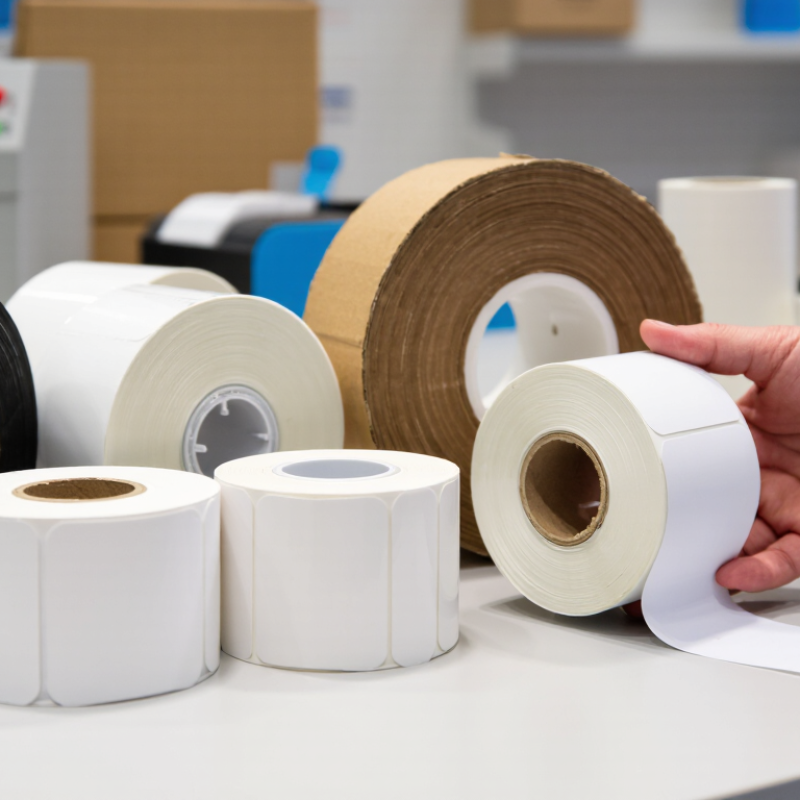
A barcode roll is a continuous web of labels wound around a cardboard or plastic core. Each label has a face stock, an adhesive layer, and a release liner that protects the adhesive until application. The barcode and any readable digits are printed on the face stock. Labels may be separated by gaps or marked with black registration marks, helping printers detect each label’s position. Roll direction and core size also affect how a label feeds and comes off the roll.

Grand View Research’s Barcode Labels Market report estimated a global market value of about US$7.1 billion in 2022, with projected annual growth of 5.6% through 2030. The figure signals broad use across retail, logistics, and manufacturing, where reliable label feeding matters. A roll can look right but still print poorly if its label pitch, winding direction, or core does not match the printer. These details are easy to miss.

Tips: Check the printer’s supported core diameter, roll width, and maximum roll diameter before ordering. Keep barcode quiet zones clear of text and artwork. Test a few labels at the intended print speed; a small mismatch may cause skipped labels or unreadable scans.
How Do Barcode Rolls Work With Printers?

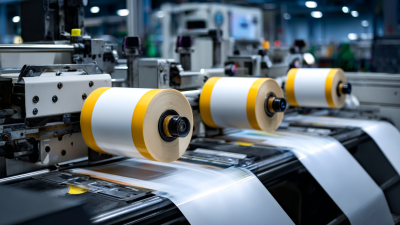
A barcode roll feeds labels through a printer one at a time. The printer’s rollers pull the backing paper forward, while a sensor detects each label’s edge or a printed mark. This helps position the barcode consistently. Small details matter. Label width, roll diameter, core size, and sensor type must match the printer’s specifications. A roll that is too wide may rub against the printer guides, while an oversized roll can resist feeding.

Most barcode labels use direct thermal or thermal-transfer printing. Direct thermal printheads apply heat to treated label material, creating an image without a ribbon. Thermal-transfer printers use heat to move ink from a ribbon onto the label, which can suit applications needing more durable prints. The printer’s settings should match the label type, print speed, and darkness.

After loading a new roll, run the printer’s calibration process so it can detect label spacing. Not every roll fits. Even compatible labels may feed poorly if the roll is loaded loosely or the guides are set incorrectly. In practice, test a few labels and check that barcodes scan clearly before printing a full batch. Calibration can be fussy, and I would not assume the first print is perfect.

What Materials and Label Formats Are Available?

Barcode rolls use a facestock, adhesive, and often a release liner. Paper is economical and prints clearly for shipping labels, shelf tags, and short-term inventory. Coated paper resists light smudging, while uncoated stock suits basic indoor use. Neither is ideal for prolonged moisture.

Polypropylene and polyester films handle splashes and frequent handling better. Polyester is generally more heat- and tear-resistant; polypropylene is flexible and often chosen for product identification. Smithers’ 2023 report, The Future of Labels and Release Liners to 2028, estimated worldwide label demand at about 68.5 billion square metres in 2023. That figure covers labels broadly, not barcode rolls alone. Roll formats also vary: standard liner-backed rolls work with many printers, while linerless labels reduce backing waste but need compatible equipment. Direct thermal stock avoids ribbons; thermal-transfer stock uses one for durable images. The trade-off can be easy to miss.

Tips: Match the material to the real surface and environment. Test a printed sample on a curved container or cold carton. Check core size, roll direction, and printer limits before ordering. Small details matter.

Common Barcode Roll Label Materials by Print Process

The chart shows typical pairings for common label stocks: direct thermal paper is designed for direct thermal printing, while coated paper, polypropylene, and polyester are commonly used with thermal transfer printing. Specialty products may differ. Roll labels are also available in continuous, die-cut (gap), and black-mark formats.

What Are the Main Types of Barcode Rolls?

Barcode rolls are commonly grouped by printing method: direct thermal and thermal transfer. Direct thermal stock darkens when heated, so it needs no ribbon. It suits short-life labels, such as parcel routing stickers and queue tickets. But sunlight, heat, and friction can fade the image. There is a catch. Thermal transfer printing uses a ribbon to bond ink onto the label. It works well for durable warehouse, asset, and outdoor labels. Paper rolls are usually economical; synthetic films, such as polyester, resist moisture and tearing. Adhesive also matters: a removable label can lift cleanly, while a permanent one stays put.

These categories can overlap. A roll may use synthetic stock, permanent adhesive, and thermal-transfer printing.

Grand View Research’s 2024 barcode-printer market report estimated the global market at about US$4.8 billion in 2023, with projected growth through 2030. That figure covers printers, not barcode rolls, but it signals the scale of barcode printing applications.

Choose stock for the printer and the label’s actual environment, not appearance alone. A label that scans at the packing bench may fail after a week in a hot vehicle. I would still test a small roll first; specifications rarely capture every surface or storage condition.

How Do You Choose a Barcode Roll for Your Needs?

Choosing a barcode roll starts with the printer, not the label design. Check the printer manual for supported roll width, maximum diameter, core size, and printing method. Direct thermal labels suit short-lived uses, such as shipping or daily stock checks. Thermal transfer labels need a ribbon, but often tolerate handling and storage better. Fit matters.

Next, match the label material and adhesive to its working conditions. Paper labels are practical for dry indoor shelves. Synthetic materials may hold up better on containers exposed to moisture or frequent handling. A label on a chilled bin can lift if its adhesive is not suited to cold surfaces. Measure the available flat area, too; a wide label may wrinkle around a narrow package.

Consider barcode size, print darkness, and how quickly staff need to scan each item. Tiny labels can force narrow bars that some scanners struggle to read, especially after smudging. Test one roll. Print a sample, apply it to the real surface, and scan it under normal lighting. I would also check how the roll unwinds and whether labels dispense cleanly; this small detail is easy to overlook. Requirements can vary, so confirm printer settings before ordering a large quantity.