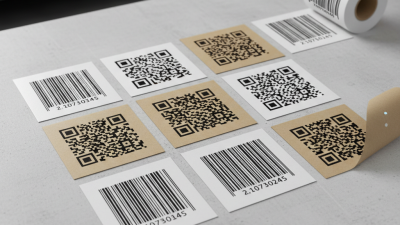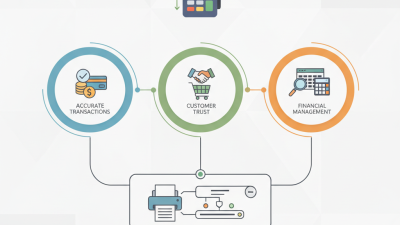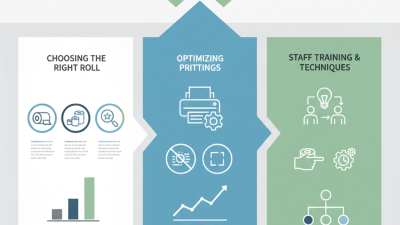
Choosing the right Paper Barcode is no longer a simple printing decision for global buyers. It affects scanning speed, inventory accuracy, packaging cost, and customer experience. A barcode may look clear on screen, yet fail after coating, folding, moisture, or transport.
Norman Joseph Woodland, co-inventor of the barcode, is often quoted as saying, “I just drew four lines in the sand.” That simple idea became a practical identification system. Today, buyers must compare familiar formats, including EAN-13, UPC-A, Code 128, ITF-14, QR Code, and GS1 DataMatrix. Each type serves different packaging, retail, logistics, or traceability needs.
The details matter. A 100-gram coated label may need different ink than a corrugated carton. A freezer label can develop condensation. A narrow quiet zone may disappear after trimming. It happens.
This guide reviews the leading Paper Barcode types expected to interest international buyers in 2026. It considers data capacity, print tolerance, scanner compatibility, label size, and supplier requirements. It also examines how barcodes perform across retail shelves, pallets, shipping cases, and product labels.
There is no universal winner. A compact QR Code may store more information, while EAN-13 remains practical for many retail systems. Code 128 can support logistics data, but poor printing still creates avoidable failures. Recommendations should therefore be tested with real materials, real scanners, and realistic handling conditions. Standards offer direction, not magic. A careful buyer should still question every specification.
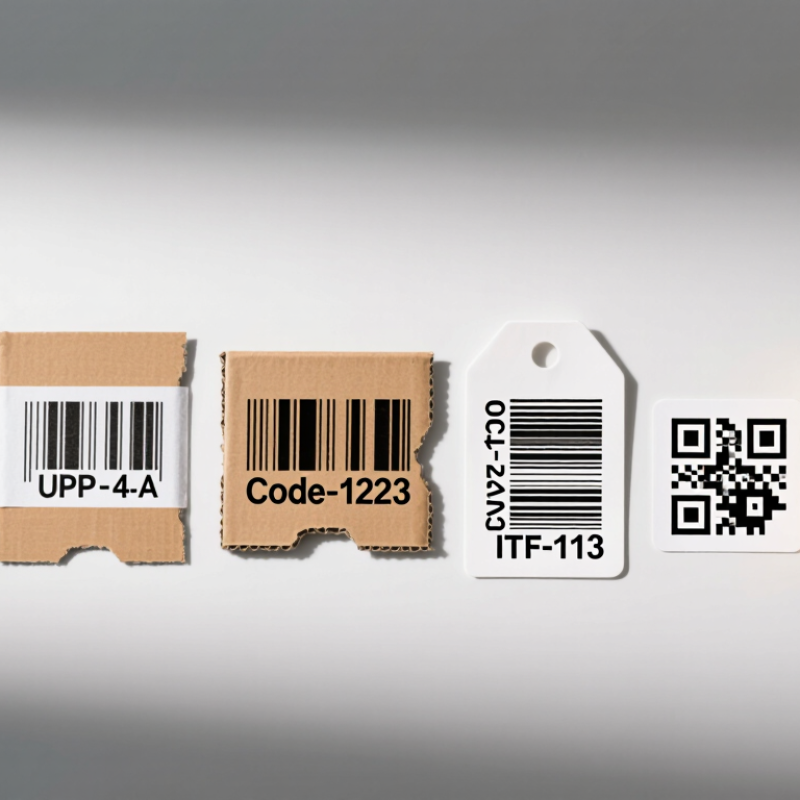
Paper barcodes are machine-readable symbols printed on labels, tags, cartons, or paper tickets. Linear codes hold basic identification data, while two-dimensional codes can store more information. They support product receiving, stock counting, order picking, and shipment checks. GS1 reports that barcodes are scanned more than six billion times worldwide each day. Smithers’ The Future of Global Printed Packaging to 2028 forecasts the printed packaging market will reach about US$551.3 billion by 2028. Paper remains practical within this expanding supply chain.
Global buyers use paper barcodes because they are lightweight, affordable, and easy to source in many countries. A buyer can print a code near the packing line, reducing pre-printed inventory and artwork changes. Good labels need sharp contrast, correct dimensions, quiet zones, and readable numbers beneath the symbol. These details sound minor. They are not. Moisture, dust, rough handling, and weak adhesive can stop a successful scan. Some purchasing teams still assume every scanner reads every format. That assumption needs reconsideration. Testing should match real cartons, warehouse lighting, and transport conditions.
Tips: Confirm the required identification standard before printing. Request a verified sample from the supplier. Test labels after rubbing, bending, and light moisture exposure. Keep essential human-readable data visible. For chilled or humid shipments, paper may need a protective coating or a different material. A low-cost label can become expensive when workers must type the data manually.

A one-dimensional paper barcode stores data along a single horizontal path. It uses dark bars and light spaces, not squares. A scanner sends light across this pattern. Dark areas absorb more light, while paper reflects more. The scanner converts changing reflections into widths and gaps. Software then matches that sequence with a selected barcode standard. Each symbol may include a start pattern, data characters, a check digit, and a stop pattern. The check digit helps detect common reading errors. It does not repair poor printing.
Global buyers commonly compare retail-style numeric symbols, logistics symbols, and general-purpose alphanumeric formats. Numeric formats suit product numbers with limited characters. Code 128 structures hold letters, numbers, and control data in a dense space. ITF-style symbols often suit outer cartons because they use larger print areas. The right choice depends on the supply chain, scanner, and data rules. Ask which encoding standard the receiving system accepts. A visually similar code may still fail.
Paper quality changes performance. A matte white label usually gives stronger contrast than glossy or colored stock. Keep a clear quiet zone around the symbol. Wrinkles, moisture, toner streaks, and faded thermal printing can interrupt the pattern. In receiving checks, scan samples from different carton faces, not only the best label. A code can pass at the packing table and fail under warehouse lighting. “Looks readable” is a weak test. Verification equipment is more reliable, though it adds cost. That trade-off deserves review before mass printing.
Two-dimensional paper barcodes store more data than traditional one-dimensional symbols. They use a grid of dark and light modules, not a single horizontal pattern. This structure can hold product codes, batch details, dates, and short web addresses. Common formats include QR codes, Data Matrix, and PDF417. Each format suits different packaging needs. QR codes support quick phone scanning. Data Matrix fits small labels. PDF417 can carry larger records in a stacked layout. More data also means more printing responsibility.
Error correction helps scanners read damaged or partly covered symbols. However, it cannot repair every poor print. Paper texture, ink spread, glare, and weak contrast can reduce accuracy. A barcode may look clear to the eye yet fail under warehouse lighting. Testing should include folded cartons, curved surfaces, and low-temperature storage. That detail is often missed. Global buyers should also confirm character support and data rules before selecting a format. No format is perfect.
Tips: Keep a quiet border around the symbol. Use strong contrast and consistent module size. Avoid placing codes across seams or glossy coatings. Print samples at the final production size. Test with several scanning devices, not only one. Review the encoded data carefully; a readable code can still contain an incorrect record. A short pilot run may reveal problems that laboratory checks miss.
2026 Top Paper Barcode Types for Global Buyers
Choosing paper barcodes starts with the product, not the printer. Short-life goods often suit direct thermal labels. They print quickly and need no ink ribbon. Use them for cartons, parcel routing, temporary warehouse tags, and fresh products. Heat, sunlight, and friction can fade them. That weakness matters.
Thermal transfer paper labels fit longer supply chains better. Their printed image resists rubbing, moisture, and moderate temperature changes. They work well for spare parts, packaged foods, medical supplies, and export cartons. Select coated or uncoated paper according to handling conditions. Test the label after transport, not only beside the printer.
For retail products, pre-printed paper labels can carry fixed information. Variable barcode data may be added during packing. Linear formats suit simple item identification, while two-dimensional codes hold more data in limited space. Keep strong contrast, clean edges, and enough quiet space around every symbol. A barcode that looks sharp may still fail on a curved package. Check scan performance through the actual supply chain. Include warehouse lighting, conveyor speed, dust, and outer-carton wear.
Paper weight also affects application. Thin stock bends easily around small containers. Heavier stock feels more durable but may not suit automatic applicators. This choice is often underestimated. Global buyers should request samples, confirm data rules, and record test results. One supplier’s “standard” may not match another country’s equipment. Mistakes happen. A second verification before mass production is worth the delay.
| Barcode Type | Symbol Format | Typical Data Capacity | Best-Fit Products | Supply-Chain Position | Paper Label Requirements | Key Advantages | Main Limitations | Global Buyer Suitability |
|---|---|---|---|---|---|---|---|---|
| EAN-13 | Linear, 1D | 13 digits, including a check digit | Retail products, packaged food, cosmetics, household goods and general consumer items | Point of sale, inventory receiving and retail distribution | High-contrast black-and-white printing; clear quiet zones; consistent size and placement | Widely used in international retail; compact format; supported by most retail scanners | Stores only numeric identification data; does not directly encode batch, expiry or serial information | Excellent |
| UPC-A | Linear, 1D | 12 digits, including a check digit | Retail products primarily intended for North American checkout systems | Retail point of sale and distribution centers | Requires accurate sizing, clear margins and reliable print contrast on coated or uncoated paper | Simple, recognizable and fast to scan in retail environments | Less suitable when a product must use a 13-digit international retail number or carry additional data | Very Good |
| ITF-14 | Linear, 1D | 14-digit trade item identification number | Shipping cartons, outer cases, corrugated boxes and warehouse handling units | Case-level identification, pallet building and distribution-center receiving | Suitable for printing on labels or directly on corrugated packaging; bearer bars can improve printing and scanning performance | Robust for logistics packaging; tolerates some printing variation; efficient for outer cases | Generally not intended for retail point-of-sale scanning; limited data content | Excellent for cases |
| GS1-128 | Linear, 1D | Variable-length application data using defined application identifiers | Fresh food, pharmaceuticals, medical supplies, industrial parts and regulated shipments | Warehouse, transport, traceability, lot control and delivery verification | Needs sufficient label width, strong contrast and accurate character encoding; human-readable text is normally added | Can encode product ID, lot number, expiry date, quantity and serial information in one label | Longer symbols require more print space and can be sensitive to poor label layout or low-quality printing | Excellent for traceability |
| GS1 DataMatrix | Two-dimensional, matrix | Depends on symbol size, error correction and the encoded data structure | Small medical packs, pharmaceutical items, electronics components and high-value parts | Item-level identification, serialization, traceability and compact packaging | Requires precise thermal-transfer, laser or high-resolution digital printing; quiet zone and module quality are critical | Stores substantial data in a small area; supports product, lot, expiry and serial information | Requires 2D imaging scanners and stricter print-quality control than many linear codes | Excellent for compact items |
| QR Code | Two-dimensional, matrix | Up to approximately 7,089 numeric characters or 4,296 alphanumeric characters under ideal conditions | Product information, manuals, authentication pages, consumer engagement and digital traceability links | Consumer-facing packaging, marketing, service support and selected logistics workflows | Requires a quiet zone, sufficient module size and strong contrast; paper must remain flat and readable | High data capacity; smartphone-friendly; can link physical packaging to digital content | Data capacity varies with error-correction level; not every warehouse workflow accepts QR as the primary logistics code | Very Good for digital access |
| Code 128 | Linear, 1D | Variable-length alphanumeric data | Internal inventory labels, transport labels, components and general warehouse identification | Warehouse management, order picking and internal material movement | Requires accurate narrow-bar printing, sufficient quiet zones and a scanner configured for Code 128 | Compact relative to its data content; supports letters, numbers and control characters | Not a universal retail product identifier; trading partners may require a standardized data structure instead | Very Good for internal use |
| GS1-DataBar | Linear or stacked, 1D | Compact identification data with several symbol variants | Small retail items, fresh produce, loose goods and products where label space is limited | Retail checkout, item identification and selected traceability applications | Needs precise sizing and reliable contrast; stacked versions require careful vertical alignment | Smaller footprint than many traditional retail barcodes; some variants can carry additional attributes | Scanner and software support may vary by market and retail environment | Good where supported |
| Codabar | Linear, 1D | Variable-length numeric and selected special characters | Libraries, blood-bank materials, laboratory samples and legacy internal systems | Specialized internal identification rather than international commercial trade | Requires a compatible legacy scanning system and clear start/stop characters | Simple structure and historically common in selected specialized workflows | Limited data capacity and declining suitability for modern global supply chains | Limited |
Choosing a paper barcode in 2026 starts with the information it must carry. Linear formats suit product numbers, cartons, and simple inventory labels. Two-dimensional codes hold more data, including batch details and service links. Select the smallest practical format, not the most impressive one. A crowded code becomes difficult to scan. Leave clear blank space around every symbol.
Printing quality matters as much as barcode selection. Use smooth, light-colored paper with strong black contrast. Avoid glossy coatings that reflect warehouse lighting. Check the printer’s resolution before reducing the symbol size. Fine bars can break during fast printing. Paper fibers, dust, humidity, and folding can also damage readability. I have seen a clean digital file fail after a rough packaging run. That gap deserves attention.
Tips: Print a test sheet at the final size. Scan it under normal workplace lighting. Try different angles and distances. Verify samples from the beginning, middle, and end of each batch. A calibrated verifier can measure contrast, edge sharpness, quiet zones, and decoding performance. Keep the approved file and print settings together. Recheck after changing paper, ink, or equipment. No test is perfect. Human handling still matters.