Why is Paper Barcode Essential for Global Sourcing?
In today’s interconnected market, the importance of Paper Barcode cannot be overstated. As businesses seek efficient global sourcing solutions, Paper Barcode systems play a pivotal role. According to Dr. Michael Liu, a leading expert in supply chain management, “Paper Barcode ensures accurate tracking and minimal errors.” This technology simplifies the complex processes involved in sourcing products from various locations worldwide.
The reliability of Paper Barcode systems lies in their ability to streamline operations. They reduce the risk of miscommunication and enhance inventory management. However, despite their advantages, many companies still overlook their potential. Some organizations rely on outdated methods, risking inefficiency and lost opportunities. This reliance raises a crucial question about adaptability in a rapidly evolving market.
Furthermore, the implementation of Paper Barcode requires investment and training, which some businesses may hesitate to pursue. The challenge here is balancing immediate costs against long-term benefits. Companies must evaluate their operations critically, considering if they have the right tools for optimal functionality. With global sourcing’s growing complexity, embracing Paper Barcode technology may be the key to staying competitive.

Importance of Paper Barcodes in Global Supply Chains
In the realm of global supply chains, paper barcodes play a crucial role. They enhance visibility and tracking throughout the entire process. Goods can be scanned at various points, ensuring accuracy. This ease of identification reduces errors. It also improves inventory management.
Many industries rely on paper barcodes for efficient operations. However, not every barcode is created equally. Variations in printing quality can hinder scanning efficiency. Additionally, environmental factors like humidity may damage barcodes. Companies need to regularly evaluate their barcode systems. Up-to-date technology ensures reliability.
Furthermore, training staff on proper handling of these barcodes is vital. Misplaced or unreadable barcodes can disrupt the supply chain flow. A more vigilant approach is necessary to maintain standards. As businesses continue to evolve, a critical assessment of current barcode practices can uncover hidden inefficiencies. This reflection can drive the need for improvement, paving the way for a more resilient supply chain.
How Paper Barcodes Enhance Tracking and Inventory Management
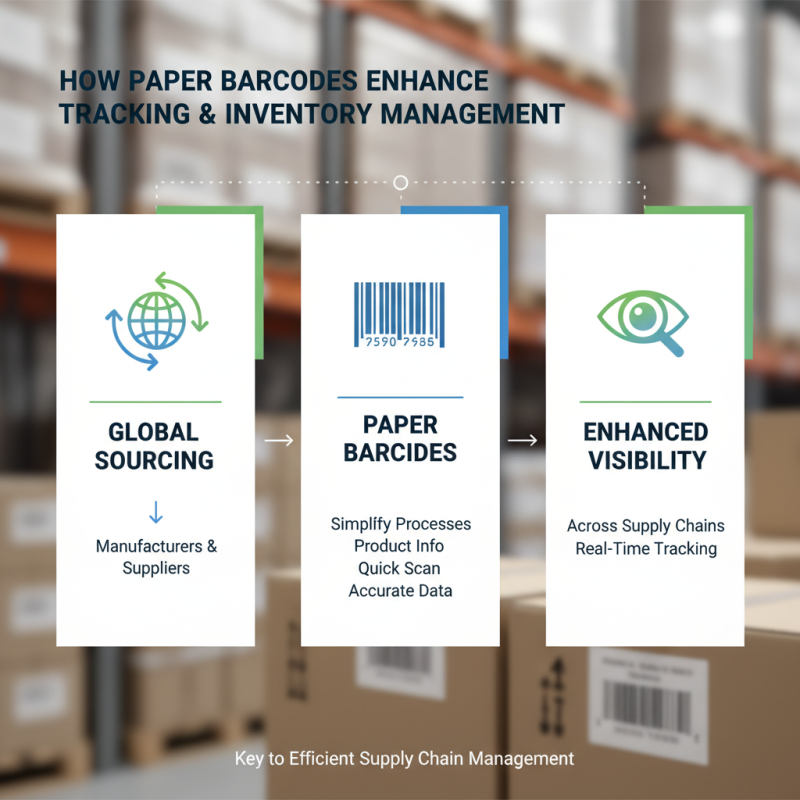
In today's global sourcing landscape, effective tracking and inventory management are vital. Paper barcodes play an essential role in simplifying these processes. When manufacturers and suppliers use paper barcodes, they enhance visibility across supply chains. Each barcode contains specific product information, allowing for quick scanning and accurate data capture.
Implementing paper barcodes facilitates real-time inventory updates. As items move through warehouses, employees can easily scan barcodes. This minimizes manual entry errors and speeds up processing times. However, relying solely on paper can present challenges. Weather damage or wear and tear might affect barcode readability. Regular maintenance and replacement of damaged labels are crucial.
Additionally, while barcodes are useful, they aren't infallible. Human error during scanning can lead to discrepancies. Companies must ensure training programs are in place for staff. Creating a culture of accuracy and accountability is essential. This combination of technology and workforce reliability strengthens the overall inventory management system.
Cost Efficiency: Comparing Paper Barcodes to Digital Alternatives
In today's fast-paced supply chain environment, cost efficiency is crucial for global sourcing. Paper barcodes offer a practical solution that often outperforms digital alternatives. According to a recent report by Supply Chain Quarterly, companies utilizing paper barcodes can reduce operational costs by up to 20%. This reduction stems from lower initial investment and maintenance costs associated with physical label printing.
Digital systems, while innovative, can involve higher costs related to software updates and hardware maintenance. A survey by the Material Handling Industry Foundation revealed that nearly 30% of businesses face challenges when transitioning to digital barcoding. This can lead to increased downtime and frustration among staff members. In contrast, employees are already familiar with paper barcodes, easing integration and minimizing errors.
However, reliance on paper can present challenges, particularly regarding durability and data storage. Paper barcodes may fade, tear, or become unreadable in harsh conditions. In scenarios where environmental factors pose risks, businesses might find themselves re-evaluating their sourcing practices. The balance between cost efficiency and operational reliability illustrates the complexity of making the right choice in this dynamic landscape.
Cost Efficiency: Comparing Paper Barcodes to Digital Alternatives
This chart illustrates the average cost efficiency per item when using paper barcodes versus digital barcodes. As shown, paper barcodes are significantly more cost-effective.
Challenges and Limitations of Paper Barcodes in Global Sourcing
Paper barcodes play a significant role in global sourcing. However, they come with challenges. One major limitation is the potential for damage. Paper can tear or smudge, leading to misreads. This can disrupt supply chains and increase costs. In high-volume environments, accuracy is crucial. A simple error can create significant delays.
Another challenge is limited scanning capabilities. Not all scanners read paper barcodes effectively. This can result in lost data or incorrect inventory counts. A reliable barcode system is essential for smooth operations. Companies often rely on paper barcodes due to low cost. But they may overlook these vulnerabilities.
Tips: Regularly assess barcode quality. Keep barcodes clear of dirt and moisture. Consider a backup scanning system. Evaluate the trade-off between cost and reliability. Sometimes, cheaper isn’t better in the long run. Teams must stay informed about industry best practices. Understanding these limitations strengthens global sourcing strategies.
Why is Paper Barcode Essential for Global Sourcing? - Challenges and Limitations of Paper Barcodes in Global Sourcing
| Challenge/Limitations |
Description |
Impact on Global Sourcing |
Potential Solutions |
| Durability |
Paper barcodes are susceptible to wear and tear, leading to unreadable codes. |
Can disrupt supply chain processes and increase errors in inventory tracking. |
Use of protective coatings or switch to more durable barcode materials. |
| Environmental Conditions |
High humidity, heat, or exposure to liquids can damage paper barcodes. |
May cause delays in shipping and receiving processes. |
Implementing better storage solutions and using barcode alternatives. |
| Scanning Errors |
Poor quality prints or misalignment can lead to scanning failures. |
Increases manual handling errors and inefficiency in logistics. |
Regular quality checks and using high-resolution printing are essential. |
| Data Capacity |
Limited data storage compared to digital barcodes. |
Constrains the amount of information that can be coded. |
Explore the use of QR codes or other 2D barcodes for larger data sets. |
| Cost |
Printing and disposal costs can add up over time. |
Can affect overall supply chain profitability. |
Evaluate long-term savings with alternative technologies. |
Future Trends: The Role of Paper Barcodes in Sustainable Practices
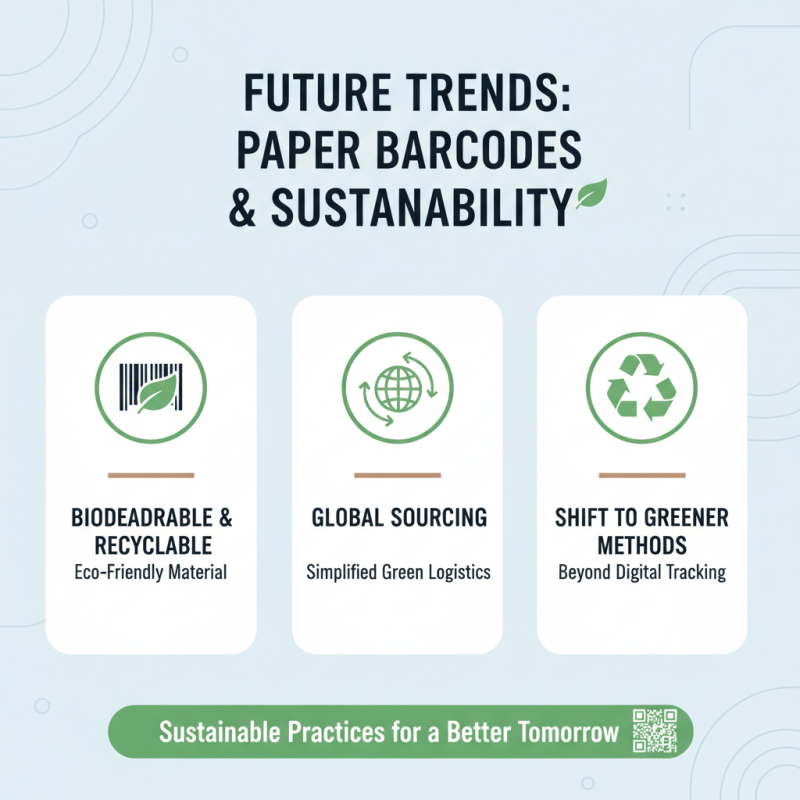
In today's global sourcing landscape, paper barcodes are gaining attention for their role in sustainable practices. Unlike digital tracking systems, paper barcodes are biodegradable and easily recyclable. This points to a shift towards environmentally friendly sourcing methods.
Many companies are concerned about waste generation. While digital solutions offer efficiency, they also contribute to electronic waste. Paper barcodes, on the other hand, present a tangible option. They require less energy for production compared to technology-driven systems. Additionally, they can be printed on recycled materials, enhancing the sustainability profile of products.
The future of paper barcodes lies in their ability to blend tradition with innovation. They can integrate data efficiently without relying on complex devices. This simplicity offers a reliable way to track products throughout their lifecycle. However, there remains a crucial challenge: ensuring that the information encoded remains accurate and up-to-date. Striking the right balance between ease of use and effectiveness is essential for maximizing their potential in sustainable sourcing.