Leave Your Message

Who Are the Top Special Label Manufacturers in China?

China’s label industry serves food, cosmetics, electronics, logistics, and many other sectors. For buyers comparing the top Special Label manufacturers, the challenge is not simply finding a printer. It is finding a partner that can match the label material, adhesive, finish, and production volume to the product’s real conditions.

A label on a chilled bottle faces different demands from one on a warehouse carton. Ask how suppliers test adhesion, resist moisture or abrasion, and maintain color across repeat orders. Review sample quality, printing methods, quality-control procedures, customization options, lead times, and communication. These practical checks offer a clearer picture than a polished catalog alone. Small details matter.

This overview introduces manufacturers and the capabilities buyers commonly assess, including pressure-sensitive labels, shrink sleeves, in-mold labels, and specialty finishes. Company rankings can change, and a strong supplier for one application may not suit another. No shortlist is perfect. Treat listed capabilities as a starting point, then confirm current certifications, production facilities, sample performance, and service terms directly with each company. A sample may look excellent under office lighting but behave differently on a cold, curved container. That possibility deserves attention. The aim is a useful, evidence-minded comparison—not a universal verdict—so readers can ask better questions and choose a manufacturer based on documented fit, not broad claims.
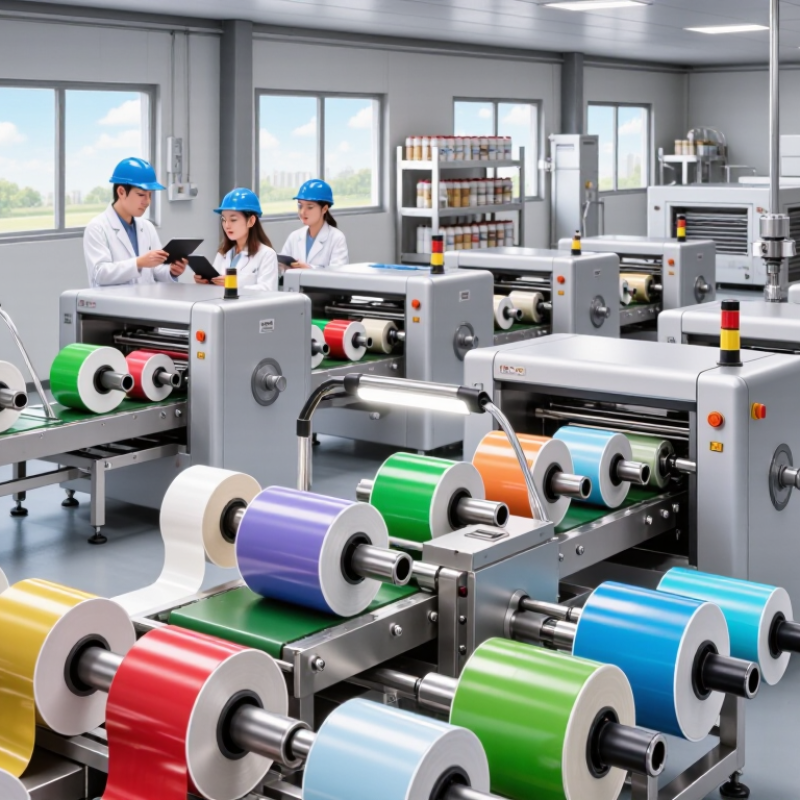
Who Are the Top Special Label Manufacturers in China?

What Are Special Labels and How Are They Used?

Special labels are engineered to do more than display a product name. They may resist water, oil, heat, abrasion, or outdoor sunlight. Some use removable adhesives, textured surfaces, or features that reveal tampering. Their construction can include a face material, adhesive, and release liner, each selected for the surface and working conditions. A label on a chilled bottle, for example, needs to stay readable despite condensation. A warehouse label may need to withstand repeated handling.

Choosing a label starts with its actual use. Check the surface, application temperature, exposure time, and printing method. A label that sticks well to clean glass may lift from dusty cardboard or flexible plastic. Test samples on the real product, not just a smooth test sheet. Give them time to age. This step is easy to skip, and that can be an expensive mistake. More features are not always better; unnecessary coatings can add cost without solving a real problem.

Tips: Write down where the label will be used and what it must endure. Test adhesion, legibility, and removal under realistic conditions. Keep a sample after testing. Small differences in storage or handling can still affect results.


How Are China’s Top Special Label Manufacturers Evaluated?

Evaluating China’s special label manufacturers starts with the intended use, not a glossy sample. A label for a curved bottle faces different stresses from one placed on a carton. Buyers should compare material, adhesive, print method, and finishing against the actual surface and environment. Ask for samples made with the proposed production process. Then inspect small text, color consistency, edge quality, and whether the label lifts after handling. Details matter.

Technical capability is only part of the review. Ask how the manufacturer checks incoming materials, monitors color between runs, and records inspection results. Request clear information about lead times, minimum order quantities, and how defects are handled. If possible, test samples on the real packaging and allow time for temperature or moisture exposure. A neat sample is not proof of stable production. No scorecard is flawless; buyers may still overlook a problem that appears only during a larger run. Compare written specifications with observed results, and note unanswered questions rather than assuming they are minor. Reliability often shows in the explanations.

Who Are the Top Special Label Manufacturers in China? - How Are China’s Top Special Label Manufacturers Evaluated?

Use this company-neutral framework to assess special-label manufacturers. The weightings are a suggested evaluation model, not verified scores or rankings of individual manufacturers.

Evaluation dimension Suggested weight What to assess Evidence to request
Printing and converting capabilities 20% Suitability of available processes—such as flexographic, digital, or screen printing—and finishing options for the required design, run size, and application. Process and equipment list; representative samples; confirmation that the proposed method can meet the artwork and order requirements.
Material and adhesive expertise 18% Ability to recommend suitable face materials, liners, and adhesives for the label surface, temperature, moisture, chemicals, and expected service conditions. Material specifications; technical data sheets; application-specific test results; documented material substitutions, if any.
Quality management and inspection 18% Documented controls for incoming materials, print consistency, dimensions, adhesion, traceability, nonconforming product, and corrective actions. Quality procedures; inspection records or sample reports; traceability examples; current certification documents where applicable.
Regulatory and market requirements 14% Ability to provide documentation relevant to the intended product and destination market. Requirements depend on the label’s use; food-contact, chemical, electrical, and other applications may have different rules. Applicable declarations, test reports, or material compliance documents; confirmation of scope and issuing organization. Verify documents independently.
Customization and technical support 10% Support for artwork preparation, prototypes, variable information, special shapes, security features, and troubleshooting during development. Documented sampling and approval process; proofing workflow; written technical responses to the buyer’s application requirements.
Delivery and production planning 8% Clarity of lead-time commitments, production scheduling, packaging, shipment coordination, and communication if a schedule changes. Written quotation and delivery terms; production milestones; order-status process; packaging and shipping specifications.
Environmental and sourcing documentation 7% Availability of relevant information about material sourcing, waste handling, and environmental management. Claims should be checked against their documented scope. Current certificates or supplier declarations where applicable; material sourcing records; explanation of environmental claims and their boundaries.
Commercial transparency and service 5% Clarity of pricing assumptions, minimum order quantities, tooling or setup charges, payment terms, complaint handling, and after-sales communication. Itemized quotation; written terms; documented complaint and replacement process; clear points of contact.
Total suggested weighting 100% Compare manufacturers against the same product specification, intended use, order conditions, and evidence requirements.

For a fair comparison, request the same sample specifications and supporting documents from each candidate. Do not treat a certificate, capability claim, or sample as proof of suitability for every label application.

Which Companies Lead China’s Special Label Manufacturing Industry?

China’s special label manufacturing industry is led by producers that combine material expertise, precise converting, and dependable quality control. There is no single public ranking that captures every specialty. Leadership depends on the label’s job: resisting moisture, surviving heat, adhering to curved surfaces, or carrying fine-print product information. Strong manufacturers can explain those trade-offs clearly, rather than offering one material for every application.

Look for practical evidence. Ask whether the supplier can test adhesive performance on your actual container, provide samples in the intended roll format, and keep small text readable after printing. For demanding applications, request details on temperature, humidity, and abrasion checks. A polished sample helps, but repeatability matters more. This is easy to overlook. A useful supplier also documents material specifications and flags limitations before production. Some factories may excel at decorative finishes yet lack experience with harsh environments; others may handle complex constructions but require longer lead times. The best fit is the producer whose equipment, testing process, and communication match the label’s real operating conditions. Industry leadership is better judged by verified capability than by broad claims.

China’s Special Label Industry: A Demand-Side Indicator

China’s express delivery volume grew from 110.58 billion parcels in 2022 to 174.5 billion in 2024. This offers context for demand for shipping and logistics labels; it is not a measure of special-label production or any manufacturer’s market share. Source: State Post Bureau of China.

What Technologies and Label Types Do These Manufacturers Offer?

China’s special-label manufacturers work across flexographic, offset, screen, and digital printing. Each suits different production needs. Flexography handles long runs efficiently, while digital printing supports short batches and variable data. Screen printing can create dense, tactile layers for control panels or premium packaging. Some converters combine methods to balance color detail, durability, and cost.

The label formats include pressure-sensitive labels, shrink sleeves, in-mold labels, thermal labels, and tamper-evident constructions. More advanced options may embed RFID or NFC components for identification and interaction. Grand View Research estimated the global smart-label market at about US$10.3 billion in 2023, forecasting a 17.7% annual growth rate from 2024 to 2030. That points to rising interest, not a guarantee that every application needs smart features. Still, integration can be tricky. Antennas, adhesives, and packaging materials must work together. A label tested on a flat sample may behave differently on a curved, cold, or damp container. Specify the surface, exposure conditions, and expected print life before comparing suppliers.

Which Industries Rely on China’s Special Label Suppliers?

Special label suppliers in China serve industries where ordinary paper stickers may fail. Electronics makers use compact labels for serial numbers, circuit-board identification, and heat exposure. Automotive suppliers need labels that stay legible on curved parts despite oil, vibration, and temperature changes. Logistics teams rely on scannable labels that survive repeated handling and damp cartons. Small details matter.

Food and beverage producers often need labels that adhere to chilled containers or flexible packaging. Cosmetic manufacturers look for finishes that remain clear on bottles touched by wet hands. Healthcare facilities use durable identification labels on equipment and storage bins, where readable text supports daily tracking. Chemical producers may need materials tested for contact with specific substances. Requirements vary, so buyers should confirm performance with the actual surface and conditions.

Tips: Request samples and test them on the intended product before placing a large order. Check adhesion, print clarity, and resistance to moisture or heat. A polished sample can still behave differently on a curved, dusty, or cold surface. Buyers sometimes focus too much on appearance; field testing is less exciting, but it can reveal problems early.