Why Choose Thermal Ribbon Rolls for Barcode Printing?
Barcode labels must remain readable through handling, storage, and scanning. A Thermal Ribbon Roll helps create durable images when paired with compatible thermal-transfer printers and label stock. The right combination can reduce fading, smudging, and unreadable barcodes. Small details matter.
Ribbon choice depends on the label material, printer settings, and exposure conditions. Wax ribbons are commonly used for paper labels in routine applications. Wax-resin and resin ribbons may suit demanding surfaces or labels exposed to friction, moisture, or chemicals. These are starting points, not guarantees. Test the actual label stock and ribbon together before changing a full production run.
A practical selection process looks beyond price per roll. Check ribbon width, length, core size, winding direction, and printer compatibility. Then print a sample at the intended speed and heat setting. Inspect the bars and quiet zones, rub the label gently, and scan it with the equipment used in daily work. A barcode that looks sharp may still fail to scan. That gap is easy to overlook.
No single ribbon is ideal for every job. Even a suitable grade can underperform if the print head is dirty, pressure is uneven, or settings are poorly matched. Reviewing these factors helps teams choose a Thermal Ribbon Roll based on real operating needs rather than assumptions. It may take a few trials. That is useful evidence, not wasted effort.
How Thermal Transfer Printing Uses Ribbon Rolls
How Thermal Transfer Printing Uses Ribbon Rolls
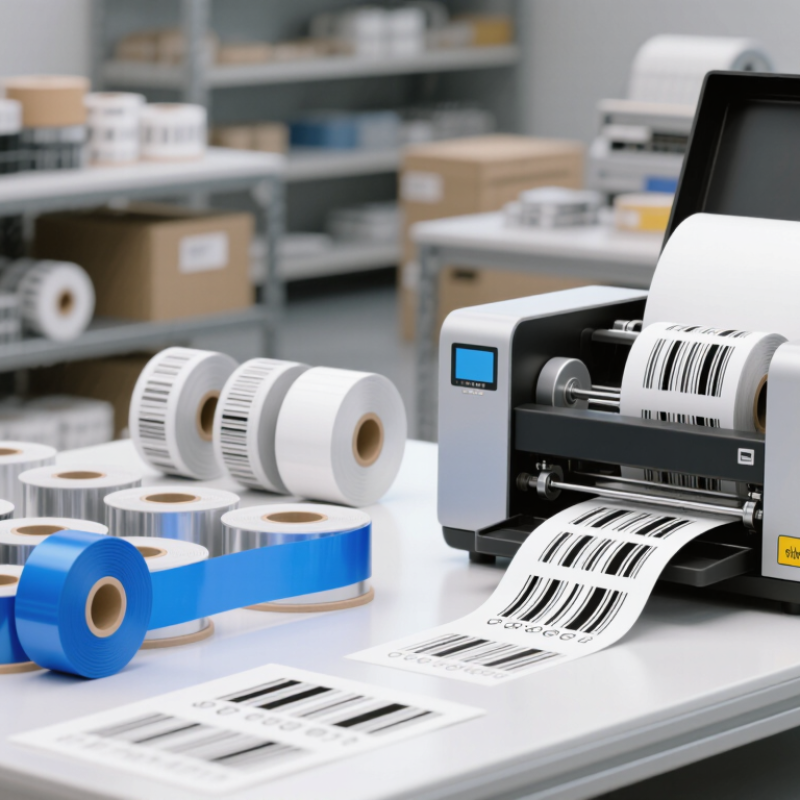
In thermal transfer printing, a printer feeds a ribbon roll between the printhead and the label. Tiny heated elements touch the ribbon’s coated side, melting ink onto the label in precise dots. The image forms line by line as the label moves forward. It happens quickly, but small setup details matter.
Ribbon coatings commonly use wax, resin, or a blend. Wax often suits paper labels, while resin can help prints resist rubbing, moisture, or chemicals on suitable materials. The right choice depends on both the label surface and its working conditions. A durable ribbon cannot fix a poorly matched label. Test a sample.
During setup, check the ribbon’s ink-side direction, roll width, and core fit. Incorrect orientation can leave labels blank or faint. Print darkness and speed also affect transfer: too little heat may create gaps, while excess heat can blur fine bars. It is easy to blame the printer too quickly. Look closely at a test label, especially narrow bars and small text, before changing settings. Thermal transfer suits jobs where readable marks need to last, though it adds a consumable roll and requires occasional replacement.
The Role of Ribbon Rolls in Barcode Production
In thermal-transfer barcode printing, a ribbon roll carries the ink that the printhead applies to a label. Heat transfers the ink in precise bars and spaces, creating a code that scanners can read. The ribbon also affects how well that image holds up during handling, storage, and transport. Small details matter.
The right ribbon depends on both the label material and its use. Wax ribbons often suit paper labels used on cartons or shelves. Wax-resin blends can offer better resistance to smudging, while resin ribbons are commonly paired with synthetic materials for tougher conditions. A mismatch may produce faint bars, excess wear, or print that rubs away. It is tempting to treat ribbon choice as a minor supply decision. That assumption can be costly.
Production teams can check print darkness, speed, and ribbon width when setting up a job. A test label, rubbed gently with a finger, can reveal weak adhesion before a full batch runs. For critical workflows, verify printed codes with a barcode verifier rather than relying only on a scanner beep. Keep rolls clean and dry, too; dust or creases can interrupt transfer. Even then, results may vary between printers, so a small trial run is worth the time.
Why Choose Thermal Ribbon Rolls for Barcode Printing? - The Role of Ribbon Rolls in Barcode Production
| Selection factor |
Wax ribbon |
Wax-resin ribbon |
Resin ribbon |
| How it prints |
The printer’s heated printhead transfers the ribbon’s ink coating onto the label surface. |
Uses the same thermal-transfer process, with an ink formulation combining wax and resin. |
Uses a resin-based ink coating transferred by heat onto a compatible label surface. |
| Common label materials |
Coated or uncoated paper labels. |
Paper labels and some synthetic label stocks; verify the specific material pairing. |
Typically used with compatible synthetic materials such as polyester or polypropylene. |
| Typical durability |
Suitable for general-purpose labels with limited exposure to abrasion or chemicals. |
Offers more resistance to smudging and abrasion than many wax formulations. |
Often selected when labels need greater resistance to abrasion, moisture, or chemicals; performance depends on the ribbon-label combination. |
| Typical applications |
Shipping, carton, inventory, and retail labels printed on paper. |
Product identification and logistics labels that need a balance of print quality and durability. |
Asset, laboratory, outdoor, and industrial labels when the label stock and exposure conditions call for added durability. |
| Print settings |
Often prints at comparatively low heat and can support fast printing, subject to printer and media specifications. |
May need a different heat and speed setting from wax; test the combination for clear, scannable barcodes. |
Often requires more print energy than wax; follow the printer and ribbon supplier’s recommended settings. |
| Main trade-off |
An economical choice for many paper-label jobs, but generally less resistant to harsh conditions. |
A versatile middle option, but compatibility and durability vary by formulation and label stock. |
Can provide high durability on suitable materials, but may cost more and needs careful media matching. |
| Barcode production tip |
Choose a ribbon compatible with both the printer and label face stock. The ribbon should generally be at least as wide as the label to help protect the printhead. Test printed barcodes with the intended scanner and check readability after the label has experienced its expected handling and storage conditions. |
Performance varies with ribbon formulation, label surface, printer settings, and exposure conditions. Confirm compatibility and test the finished label before production.
Key Benefits of Ribbon-Based Barcode Printing
Thermal ribbon rolls help produce barcodes that remain readable through handling, storage, and shipping. During printing, a heated printhead transfers ink from the ribbon onto the label. The result can resist smudging better than many direct thermal prints. That matters when cartons rub against one another or labels pass through a busy warehouse. Small details count: clean bars, sharp edges, and adequate contrast help scanners read codes reliably.
Ribbon-based printing also works with a range of label materials. Wax ribbons often suit paper labels used for routine indoor labeling. Wax-resin blends can offer greater resistance to abrasion, while resin ribbons are commonly paired with suitable synthetic materials for demanding conditions. Match the ribbon to both the label stock and its environment. A label stored near a warm loading dock may need different protection from one used on a shelf. Test a sample. It can reveal fading, smearing, or poor adhesion before a full production run.
There is a trade-off. Ribbons add a consumable to track, and the wrong combination may waste stock or produce faint prints. Printer heat and speed settings also affect results, so make small adjustments and inspect actual labels. Not every barcode needs a ribbon, and more durability is not always worth the added cost. A practical choice depends on how long the label must remain legible, what it touches, and how often it is scanned.
Ribbon Types and Printer Compatibility
Thermal ribbon selection begins with the label material and the printer’s requirements. Wax ribbons suit many paper labels used for shipping or shelf identification. They print at relatively low energy, but scuffs and moisture can blur the image. Wax-resin blends offer better resistance for labels handled often. Resin ribbons are designed for demanding synthetic materials, such as polyester, where heat and chemicals may be concerns. They are not automatically the best choice. On ordinary paper, their extra durability may add cost without much benefit.
Compatibility is just as important as ribbon type. Check the printer manual for supported ribbon width, maximum roll diameter, core size, and ink-side orientation. A ribbon that is too wide can wrinkle or rub against the printhead. One that unwinds in the wrong direction may not transfer ink at all. Small details matter. Also confirm whether the printer uses a flat-head or near-edge printhead; some ribbons are formulated for one style, not both. Print speed and heat settings affect transfer quality, so test a few labels before running a full roll.
A practical test uses the actual label stock and typical handling conditions. Look closely at fine bars and small text, then rub the label with a dry cloth. If the print fades, adjust the ribbon match or settings. Compatibility charts help, though real results can vary with stock coatings and storage. It is easy to overlook that last part.
Why Choose Thermal Ribbon Rolls for Barcode Printing?
Typical performance by ribbon type. Ratings are qualitative comparisons, not standardized laboratory measurements.
Choosing a ribbon: Wax is commonly used with paper labels for general-purpose printing; wax-resin offers greater resistance and suits many coated papers and some synthetics; resin is typically chosen for synthetic labels needing strong resistance to abrasion, chemicals, or heat. These are general tendencies—results depend on the label material, printer settings, and use conditions. Confirm ribbon width, core, ink-side orientation, and printer compatibility before ordering. Direct thermal printers do not use ribbons.
How to Choose a Thermal Ribbon Roll for Your Needs
Choosing a thermal ribbon roll starts with the printer and label material, not the price per roll. Confirm that your printer uses thermal transfer printing, then check its core size, maximum roll diameter, and ink-side orientation. Small details matter. The ribbon should suit both the printhead and the label stock. Wax often works for paper labels used indoors. Wax-resin can offer better resistance to smudging on coated paper or some synthetic materials. Resin is often chosen for synthetic labels exposed to abrasion, moisture, or chemicals, but compatibility should be confirmed with the supplier’s specifications.
Next, match ribbon width and length to your labels and printer limits. A ribbon that is too narrow may leave parts of the printhead unprotected; one that is too wide may not fit correctly. Consider how the barcode will be handled: a shipping label has different demands from a product label that gets wiped or rubbed. Print speed and darkness settings also affect results. Test a few labels on the actual stock, then scan them and rub them gently. There is no perfect formula. It is easy to focus on durability and overlook how the label surface changes print quality. Test before scaling.