Leave Your Message

Top 10 Thermal Ribbon Roll Suppliers for Global Buyers

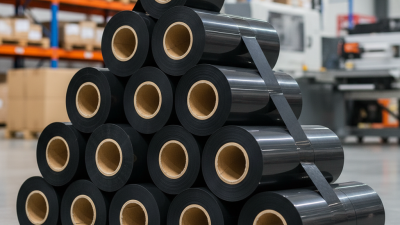
Choosing the right Thermal Ribbon Roll supplier can affect print quality, machine uptime, and total packaging costs. Global buyers often compare suppliers by coating consistency, roll dimensions, ink transfer, and material compatibility. A ribbon that looks acceptable on day one may produce faint barcodes after several production shifts. Small details matter.

This guide introduces ten suppliers serving international buyers across labels, logistics, retail, manufacturing, and healthcare packaging. The selection considers product range, manufacturing experience, quality controls, export capability, technical support, and buyer feedback. It also examines practical details, such as core size, winding direction, ribbon length, and storage conditions. These points help purchasing teams match ribbons with thermal transfer printers and demanding production environments.

Price is only one part of the decision. A cheaper roll may create waste, reprints, or unexpected machine cleaning. That said, supplier claims should not be accepted without verification. Samples, specification sheets, test reports, and clear communication remain essential. No ranking stays perfect for every buyer. A supplier suitable for wax ribbons may not meet the needs of resin applications or harsh chemical labels.

The companies discussed here represent useful starting points, not automatic purchasing recommendations. Buyers should confirm current certifications, lead times, minimum order quantities, and regional delivery terms before ordering. Real-world trials still matter. A short print test can reveal more than a polished catalogue. This overview aims to support informed comparisons with practical, evidence-based guidance.
Top 10 Thermal Ribbon Roll Suppliers for Global Buyers

Thermal Ribbon Rolls: Types, Uses, and Core Buyer Considerations

Top 10 Thermal Ribbon Roll Suppliers for Global Buyers

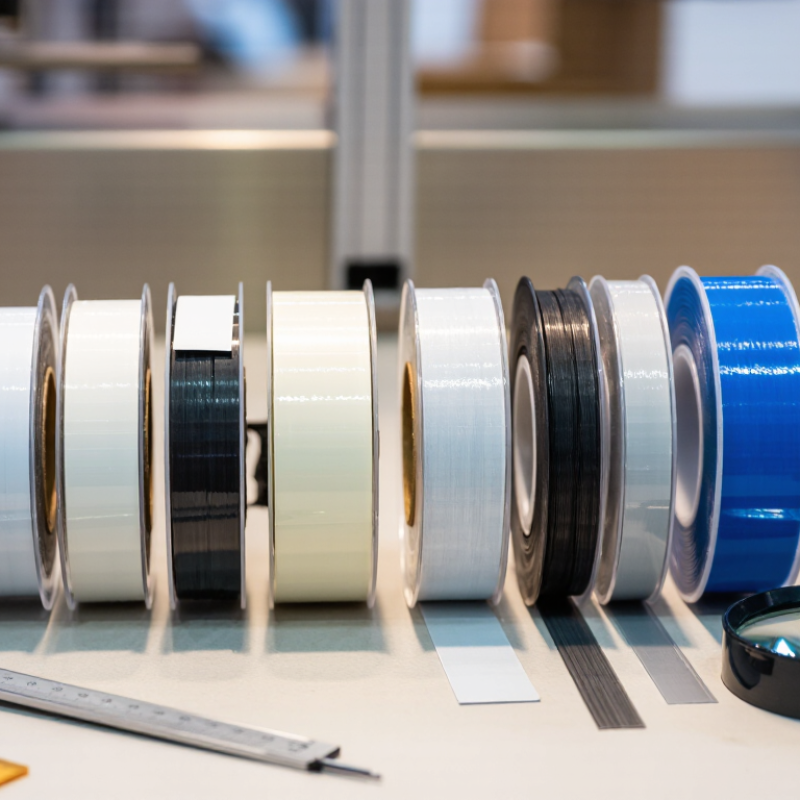
Thermal ribbon rolls transfer ink onto labels, tags, films, and coated paper. Wax ribbons suit ordinary paper labels and moderate-speed shipping applications. Wax-resin grades provide sharper barcodes and stronger abrasion resistance. Resin ribbons perform best on synthetic materials, including polyester and polypropylene. Near-edge ribbons support fast packaging lines, but they require compatible printer settings.

The substrate decides more than the ribbon price. A 2024 Smithers analysis of packaging print identifies traceability and shorter production runs as continuing demand drivers. Buyers should verify ribbon width, length, core diameter, ink-side orientation, winding direction, and printer compatibility. A 110-millimeter ribbon may still fail when the core or coating behaves differently. Test samples matter.

Storage also affects performance. Keep rolls sealed, dry, and away from direct heat. Industry guidance commonly recommends controlled room conditions near 20–25°C and moderate humidity. Data Bridge Market Research reports continued mid-single-digit growth for the thermal transfer ribbon market through the early 2030s, reflecting wider labeling and logistics usage.

Yet growth does not guarantee the right specification. I have seen buyers select resin for every job, although wax-resin would have reduced cost without losing readable marks. That assumption needs checking. Evaluate total cost per printed label, not only the roll invoice. Ask suppliers for batch consistency, technical data sheets, and documented quality controls. Suppliers that answer vaguely deserve a second review.

Key Criteria for Evaluating Global Thermal Ribbon Suppliers

Top 10 Thermal Ribbon Roll Suppliers for Global Buyers

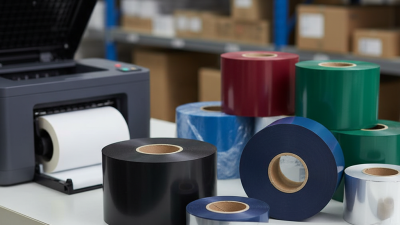
When evaluating global thermal ribbon suppliers, price should not lead the decision. Grand View Research estimates the global thermal transfer ribbon market at approximately USD 2.28 billion in 2023, with continued growth through 2030. That expansion increases supplier choices, but quality differences remain significant. Buyers should inspect coating uniformity, ink density, edge trimming, roll tension, core dimensions, and winding consistency. A ribbon should produce sharp barcodes on the buyer’s actual printer, label stock, speed, and temperature settings.

Request production samples, not laboratory samples. Print long batches and check barcode grades using ISO/IEC 15416 methods. Examine smearing, missing dots, adhesive transfer, and fading after handling. Smithers’ industry research on printed labels highlights rising demands for durability, traceability, and reliable variable information. Suppliers should therefore provide batch codes, inspection records, storage guidance, and documented material specifications. Small details matter.

Logistics deserve equal attention. Compare minimum order quantities, lead times, export packaging, replacement procedures, and regional inventory. A low quote can still be expensive. Calculate usable meters, waste, downtime, and rejected labels rather than roll price alone. I would also request a written shelf-life statement and temperature limits. They are often overlooked. Certifications can support trust, but certificates do not replace performance tests. My own evaluation would keep a scoring sheet, while leaving room for doubt; one successful trial cannot prove stable quality across every batch.

Top 10 Thermal Ribbon Roll Suppliers Across Major International Markets

Top 10 Thermal Ribbon Roll Suppliers for Global Buyers

Global buyers need more than low prices when comparing thermal ribbon roll suppliers. Market estimates from Grand View Research place the thermal transfer ribbon market at over USD 2 billion in 2023, with steady growth expected through 2030. Smithers also identifies logistics, retail, manufacturing, and healthcare as major demand sectors. These findings support a regional sourcing strategy, not a single-country purchasing model.

A practical top-ten shortlist should cover suppliers serving North America, Europe, East Asia, South Asia, Latin America, and the Middle East and Africa. Evaluate each supplier’s wax, wax-resin, and resin ranges. Check roll width, length, coating uniformity, core size, and printer compatibility. GS1 guidance on barcode quality makes accurate darkness and edge definition essential. Request samples for glossy cartons, plastic films, and rough labels. Real production tests matter more than catalog claims.

No ranking is perfect. A supplier with excellent export coverage may offer weaker technical support locally. Another may provide consistent resin ribbons but lack short-run flexibility. Buyers should review ISO-certified processes, batch traceability, lead times, and packaging protection. Smithers’ industry analysis suggests that automation and higher-performance labeling will influence future demand. Yet forecasts can change. Humidity, storage temperature, and transport delays still create practical risks that reports may understate. Cost per usable label remains the clearest comparison.

Top 10 Thermal Ribbon Roll Suppliers Across Major International Markets

Common commercial roll-length formats help global buyers compare supplier inventory, shipping efficiency, and printer compatibility without relying on company or brand rankings.

The chart shows widely used thermal transfer ribbon lengths, measured in meters. Short rolls are commonly used for desktop and compact industrial printers, while longer rolls are generally selected for high-volume production environments.

Comparing Ribbon Quality, Printer Compatibility, Pricing, and Support

For global buyers, a top-ten supplier list should begin with ribbon performance, not catalogue size. In real warehouse tests, clean edges matter more than glossy marketing. Compare wax, resin, and wax-resin grades against your labels and print speed. A sharp barcode should remain readable after rubbing, stacking, and moderate heat exposure. Check coating uniformity across the roll. Uneven coating can create pale lines or print-head buildup. It is easy to miss this during a short sample run.

Printer compatibility needs equal attention. Confirm core size, roll width, winding direction, ink-side position, and maximum print speed. Ask for samples using your exact printer model and label stock. A ribbon that works on one machine may wrinkle on another. Request technical data, batch identification, and storage guidance. Pricing should include freight, damaged-roll replacement, customs documentation, and minimum order quantities. The cheapest quote may become expensive after rejects and production delays. Support quality is measurable through response time, troubleshooting skill, sample access, and claims handling.

Tips: Test three rolls from different batches, not one perfect sample. Record darkness, smearing, wrinkles, and barcode grades. Keep the results beside each quotation. Ask suppliers to explain failures, not merely offer discounts. I would also review their quality records and escalation process. Some suppliers provide excellent material but weak follow-up. That gap deserves attention. Recheck assumptions before signing a long contract.

A Step-by-Step Method for Shortlisting the Right Supplier

Top 10 Thermal Ribbon Roll Suppliers for Global Buyers

A Step-by-Step Method for Shortlisting the Right Supplier

Shortlisting thermal ribbon roll suppliers starts with your printer, label stock, and working temperature. Record the required width, length, core size, winding direction, and ribbon type. Ask suppliers for technical data sheets and recent production samples. Request details about coating uniformity, storage conditions, and recommended print speed. Do not rely on catalogue photos alone. An impressive catalogue proves very little.

Test samples on your actual printer and label material. Print small text, barcodes, and dense black areas. Measure contrast, edge sharpness, smudge resistance, and ribbon breakage. Check performance after heat, humidity, and light exposure when relevant. Compare at least three suppliers using the same settings. One supplier may perform well on paper labels but poorly on synthetic stock. That difference matters. Small trials reveal expensive problems.

Score each supplier for quality consistency, response time, technical support, minimum order quantity, lead time, and packaging. Review batch codes and traceability records before placing a large order. Confirm export documents, carton protection, and delivery terms in writing. Ask how complaints are investigated and corrected. During my own early sourcing work, I focused too heavily on unit price. The cheaper roll created more printer cleaning and production delays. A supplier with clear evidence, stable communication, and realistic claims is usually safer. I still leave room for doubt. Claims need testing.

Top 10 Thermal Ribbon Roll Suppliers for Global Buyers - A Step-by-Step Method for Shortlisting the Right Supplier

Step Evaluation Dimension Weight Practical Acceptance Benchmark Evidence to Request Buyer Verification Method
1 Ribbon Construction 15% The supplier should clearly identify the ink formulation as wax, resin, or wax-resin and specify the backing film, coating side, and intended print surface. Technical data sheet, product specification, coating-side declaration, and sample roll. Match the supplied construction with the required media and application before approval.
2 Printer and Media Compatibility 12% The ribbon width should be compatible with the label width, and the roll dimensions should fit the printer spindle, core holder, and maximum outside diameter. Dimensional drawing, core-size options, maximum roll diameter, and printer compatibility list. Measure the printer mounting area and conduct a physical fit test using a production-equivalent roll.
3 Print Quality 12% Test output should show readable text, clean barcodes, consistent solid areas, and minimal voids at the buyer's normal print speed and darkness setting. Printed test labels, recommended printer settings, and barcode verification results where applicable. Run the same artwork and media on at least two production-representative batches.
4 Durability and Resistance 10% For demanding labels, the printed image should be evaluated for resistance to rubbing, moisture, chemicals, heat, and outdoor exposure according to the application. Application-specific test report, recommended ribbon grade, and stated operating limitations. Perform a rub test and expose samples to the actual chemicals, temperature, and humidity expected in service.
5 Dimensional Accuracy 10% Width, length, core diameter, winding direction, and ink-side orientation should remain within the tolerances agreed in the purchase specification. Approved drawing, dimensional tolerances, winding specification, and inspection report. Check incoming rolls with calibrated measuring tools and record deviations by batch.
6 Batch Consistency 10% Different production lots should provide consistent print density, coating uniformity, roll winding, splice control, and release performance. Certificate of analysis, lot identification method, quality-control plan, and retention-sample policy. Compare samples from multiple lots rather than approving only one trial roll.
7 Compliance Documentation 8% Documentation should match the destination market and application, including applicable chemical, environmental, packaging, or safety requirements. Declarations for applicable regulations, safety data where required, and material composition information. Confirm document validity, product reference, revision date, and destination-country applicability.
8 Production Capacity and Lead Time 8% The supplier should state standard and custom-order lead times, monthly capacity, minimum order quantity, and escalation procedures for urgent demand. Capacity statement, production schedule, lead-time commitment, and business-continuity plan. Compare promised lead times with historical delivery records and place a controlled pilot order.
9 Packaging and Storage Control 8% Rolls should be protected from dust, crushing, excessive heat, moisture, and prolonged direct light during storage and transport. Packaging specification, storage recommendations, carton labeling format, and palletization details. Inspect cartons and rolls on arrival and monitor storage conditions against the supplier's instructions.
10 Total Cost and After-Sales Support 7% The comparison should include ribbon price, freight, duties, tooling or setup charges, waste, defect risk, technical support, and replacement terms. Complete quotation, Incoterms, payment terms, warranty policy, complaint process, and technical-support contacts. Calculate landed cost per usable roll and score response time during the qualification process.
Total Shortlisting Score 100% Rank each qualified supplier against the same evidence-based criteria before commercial negotiation.