Leave Your Message
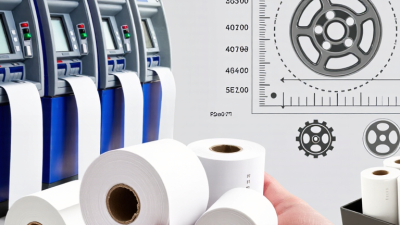
Choosing Atm Receipt Paper in 2026 means balancing clear printing, dependable feeding, and sensible operating costs. A receipt that fades quickly or jams inside a terminal can create extra work for staff and frustration for customers. Small details matter.
Grand View Research estimated the global thermal paper market at USD 4.36 billion in 2023 and projected a 5.2% compound annual growth rate from 2024 to 2030. That figure covers thermal paper broadly, not ATM rolls alone, so it should not be treated as an ATM demand forecast. It does, however, show why buyers should compare suppliers carefully. Market growth cannot tell you which roll fits your printer.
Start with the terminal manufacturer’s specifications. Check roll width, maximum diameter, core size, winding direction, and paper thickness. A few millimeters can affect loading or feeding. Ask suppliers for technical data on thermal sensitivity, print darkness, and image durability. Confirm that the paper suits your printer head and expected storage conditions. Request samples, then test them in the actual machine. Check for clean text, consistent cutting, and smooth feeding across several rolls. Review supplier quality records and relevant product documentation. A low unit price may look attractive, but waste and repeat service visits can change the calculation. The best choice is not always obvious. Good specifications help, but real-world testing remains essential.
ATM Receipt Paper in 2026: Identify the Types and Their Core Properties
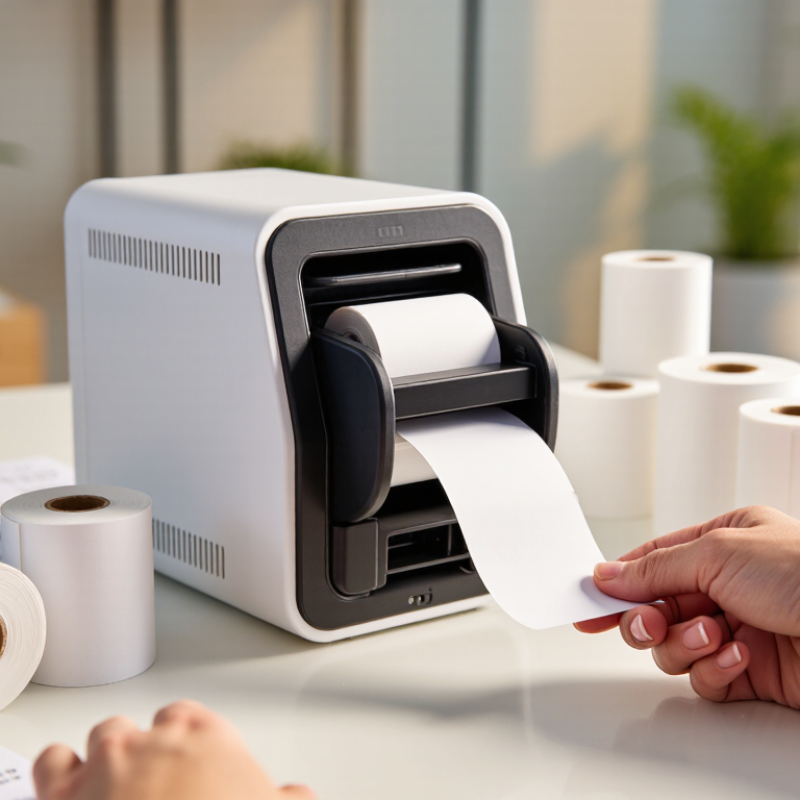
ATM receipts generally use direct thermal paper or bond paper. Direct thermal stock has a heat-sensitive coating that darkens under the printer’s printhead. It needs no ink ribbon and is common in compact ATM printers. Bond paper has no thermal coating and requires an ink ribbon, making it suitable for impact printers. That distinction matters. Some systems use two-ply rolls, but the printer must support them.
Thermal paper comes in different coating grades. A top-coated surface can offer better resistance to moisture, oils, and handling, while basic grades may suit short-lived receipts. Image life also depends on heat, sunlight, and storage; no coating makes a receipt indestructible. Look at paper width, roll diameter, core size, and thickness. A roll that is too large or a sheet that is too stiff can feed poorly. Small details, big headaches.
A paper sample can reveal problems that a specification sheet misses. Check print darkness, cutting, curling, and dust around the printer path. I would not judge quality by whiteness alone; a bright roll can still produce faint text. Confirm the printer’s requirements, then test a roll in real operating conditions. It is easy to overlook storage, too: warm rooms can shorten the life of printed thermal receipts.
| Paper Type | Printing Method | Core Properties | Typical ATM Fit | Selection Checks |
|---|---|---|---|---|
| Standard Direct Thermal | Heat-sensitive coating forms the image when activated by a thermal printhead; no ink ribbon is required. | Quiet, fast printing with relatively simple printer maintenance. Images can be affected by heat, light, friction, oils, and some chemicals. | Common choice for ATMs equipped with direct thermal receipt printers. | Confirm printer compatibility, roll width, maximum roll diameter, core dimensions, and the paper’s specified print sensitivity. |
| Top-Coated Thermal | Direct thermal printing, with an additional protective layer over the heat-sensitive coating. | The topcoat can improve resistance to handling, moisture, oils, or abrasion, depending on the paper’s tested specification. It does not make receipts permanently archival. | Useful where receipts are handled frequently or may encounter more demanding storage or operating conditions. | Compare documented resistance and print performance; verify that the roll is approved for the printer and does not require special printhead settings. |
| Phenol-Free Thermal | Direct thermal printing using a non-phenol developer system instead of a phenol-based developer. | Describes the developer chemistry, not necessarily the presence or absence of a protective topcoat. Formulations and performance vary. | Suitable when procurement requirements specify phenol-free thermal paper, provided the stock meets the ATM’s printer requirements. | Check the supplier’s written chemical declaration and printer-compatibility data. “BPA-free” alone does not establish that a paper is free of all phenolic developers. |
| Recycled-Content Thermal | Direct thermal printing on paper that contains a stated proportion of recycled fibre. | Recycled content and print characteristics vary by product. Surface consistency, dust, stiffness, and feed performance should meet the printer’s requirements. | Can be considered where recycled-content purchasing criteria apply and the paper has been qualified for the ATM. | Request the recycled-content percentage and relevant product specifications; test feeding, image quality, and printhead cleanliness in the intended machine. |
| Plain Bond Paper | Typically printed by an impact mechanism, such as a dot-matrix printer, using an ink ribbon; it does not develop an image from heat alone. | Uses ordinary uncoated paper and ribbon-based printing. It is not a drop-in substitute for thermal paper in a direct thermal printer. | Used only in ATMs fitted with a compatible impact receipt printer; less common in modern receipt-printing installations. | Confirm the printer mechanism, paper path, roll or sheet format, ribbon requirements, and any specified paper weight. |
Size and storage note: Receipt rolls around 57–58 mm (about 2.25 in) and 80 mm (about 3.15 in) wide are common formats, but ATM requirements are model-specific. Verify roll width, roll diameter, core diameter, and winding direction against the printer documentation. Store thermal rolls in a cool, dry place away from direct sunlight and heat.