How to Choose the Best ATM Receipt Paper for Your Business
Choosing Atm Receipt Paper is a small purchasing decision with visible effects at the ATM. A faded receipt, a jammed roll, or paper that does not fit can frustrate customers and add work for staff. The right choice depends on printer compatibility, print clarity, roll capacity, and how receipts will be stored.
Cash remains relevant to payment operations. The Federal Reserve’s 2024 Diary of Consumer Payment Choice reported that cash accounted for 16% of U.S. consumer payments in 2023. That figure does not measure ATM receipt use directly, but it shows why dependable cash services still matter. Small details matter.
Compare the paper’s width, roll diameter, core size, and winding direction with your printer specifications. Thermal paper quality also affects how clearly transaction details print and how well they remain readable over time. Ask suppliers for product specifications and information about chemical composition; do not rely on vague claims such as “premium” or “eco-friendly.” Fit comes first. A low-cost roll may become expensive if it causes jams or frequent replacements. Test before switching. Try a sample roll during normal operation, then check print legibility, feeding, and storage needs. No single grade suits every ATM fleet, and paper that works in one machine may fail in another. That is easy to overlook. A careful, documented trial can help your business balance reliability, customer experience, and operating cost.
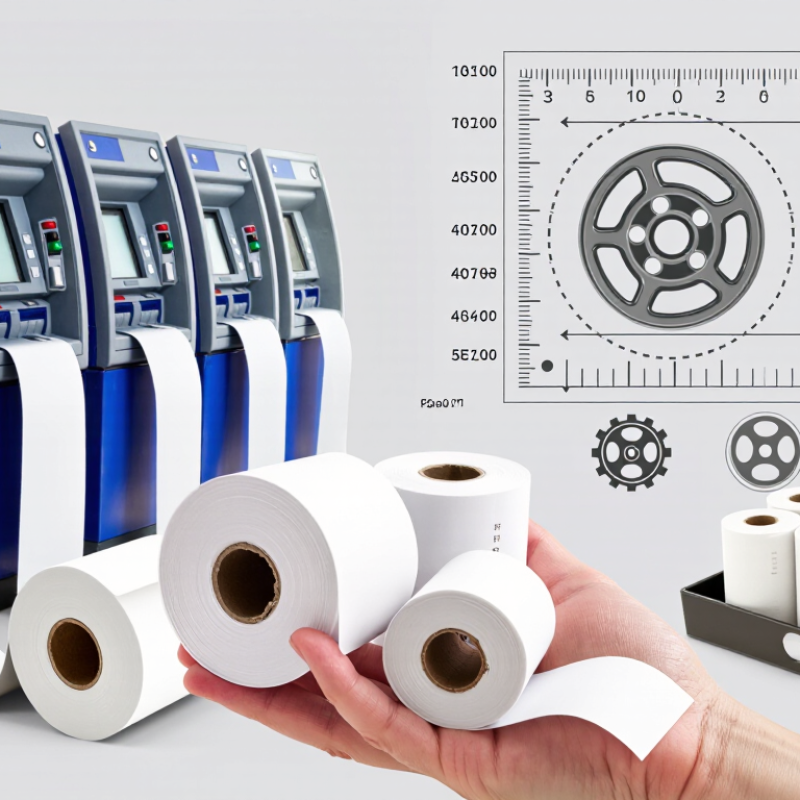
Understanding ATM Receipt Paper and Its Role in Transactions
An ATM receipt is a small record of a much larger transaction. It can show the withdrawal amount, date, time, and remaining balance, giving customers a quick way to check what happened. Clear printing matters. If figures fade or smear, customers may struggle to verify a transaction or keep the receipt for their records. The paper also needs to feed smoothly through the printer. A jam at a busy location can mean delays and extra service work.
Most ATM receipts use thermal paper, which develops text when heated by the printer head. When choosing a roll, check its width, diameter, and core size against the machine’s specifications. A roll that looks close may still fit poorly. Test a sample in the actual ATM, then inspect the print for sharp numbers and even darkness. Small details count. Paper that curls, sheds dust, or tears unevenly can create avoidable maintenance issues.
Storage affects readability, too. Keep spare rolls away from heat, direct sunlight, and damp areas; these conditions can cause thermal print to fade or darken. It is tempting to choose the lowest-cost option, but price alone does not show how consistently a roll will perform. Compare print quality and roll capacity during routine checks. One limitation is easy to overlook: even suitable paper cannot compensate for a worn printer head or incorrect settings.
Identifying Your ATM Printer and Paper Requirements
Identifying Your ATM Printer and Paper Requirements
Before ordering rolls, check the printer’s model label and specification sheet. Record the paper width, maximum roll diameter, core size, and loading direction. These details matter: a roll that is slightly too wide can rub against the housing, while an oversized core may not seat properly. Most ATM receipt printers use direct thermal paper, but confirm the printer type rather than relying on appearance. Measure an existing roll, too. I once overlooked the core diameter; the roll looked right, but it would not feed smoothly.
Paper quality affects both legibility and machine performance. Check the coating’s thermal sensitivity and the paper’s thickness against the printer specifications. A crisp test print should show small text and barcodes without dark bands or fading. Test a roll in the actual ATM, not just on a desk. Heat, dust, and frequent paper changes can expose problems that a quick sample misses. Small details matter.
The Federal Reserve’s 2024 Diary of Consumer Payment Choice reports that cash represented 16% of U.S. consumer payments in 2023, so clear ATM receipts remain useful to many customers. ATMIA’s 2023 global market assessment estimated about 3.3 million ATMs worldwide in 2022, reflecting a broad mix of printer configurations. These figures are not paper specifications; use them as context, then verify your own machine’s requirements. A little uncertainty remains when older printer documentation is missing. In that case, compare the installed roll with the printer’s measured feed path before buying in bulk.
How to Choose the Best ATM Receipt Paper for Your Business
Identifying Your ATM Printer and Paper Requirements
Check your printer’s supported paper width, core size, and maximum roll diameter before ordering. The chart estimates roll length for a 180 mm outside-diameter roll with a 25 mm core, using different paper thicknesses.
How to read this: Thinner paper generally provides more paper per roll when roll and core diameters are unchanged. These are geometric estimates; actual capacity can vary with winding and paper specifications. Always confirm roll dimensions and paper compatibility with your printer manual.
Comparing Paper Types, Sizes, and Performance Features
ATM receipt paper is usually thermal, but “thermal” alone does not describe its performance. Direct thermal paper darkens under the printer’s heated print head, so it needs no ribbon. Bond paper uses an ink ribbon and is less sensitive to heat during storage, but adds a consumable and maintenance step. For many ATM setups, matching the printer’s media specification matters more than choosing paper by appearance. A small mismatch can cause a costly snag.
Check roll width, outer diameter, core size, and winding direction against the ATM manual. Common widths include 2¼ and 3⅛ inches, but models vary. A roll that is too wide may rub against its holder; an oversized roll may not fit inside the cabinet. Core fit matters too. I still find this easy to overlook.
Look for even coating and smooth edges that feed cleanly through the printer. Dust or rough edges can collect along the paper path. Printed text should remain readable after handling, not merely look dark when first dispensed. Heat, sunlight, and damp storage can shorten image life, so keep spare rolls sealed and away from windows. Test a case before changing every location. Specs help, but real machines can be fussy.
How to Choose the Best ATM Receipt Paper for Your Business - Comparing Paper Types, Sizes, and Performance Features
| Paper type |
Printer compatibility |
Common roll widths |
Print and operating characteristics |
Durability and handling |
Best suited for |
| Standard thermal paper |
Direct thermal printers; no ink ribbon is used |
57 mm (about 2¼ in) or 80 mm (about 3⅛ in) |
Text and graphics are formed by heat. Quiet operation and relatively simple paper loading. |
Image can fade with heat, prolonged light exposure, friction, or contact with certain chemicals. Store in a cool, dry place away from direct sunlight. |
Everyday ATM receipts where the printer is designed for direct thermal media. |
| Top-coated thermal paper |
Direct thermal printers; confirm the printer supports the roll’s width and specifications |
Commonly available in 57 mm and 80 mm widths |
A protective top layer is designed to improve resistance to handling and environmental exposure compared with basic thermal paper. |
May offer better resistance to moisture, oil, or abrasion, depending on the product; it is still thermal paper and should be stored appropriately. |
Locations where receipts are handled frequently or may encounter more demanding conditions. |
| Phenol-free thermal paper |
Direct thermal printers, subject to the printer’s media requirements |
Commonly available in 57 mm and 80 mm widths |
Uses a thermal coating formulated without specified phenolic developers, such as BPA or BPS; check the product documentation for the exact claim. |
Print-life and handling performance depend on the specific coating, not solely on whether the paper is phenol-free. |
Businesses seeking a phenol-free media option while retaining direct thermal printing. |
| Bond or plain paper |
Typically impact printers that use an ink ribbon; not suitable for direct thermal printing |
Width and roll format vary by printer; match the device specification |
Print is made using an ink ribbon and impact mechanism. Paper itself does not require a heat-sensitive coating. |
Printed output depends on the ribbon and paper. The printer may be noisier and require ribbon replacement. |
ATM models specifically designed for impact printing or plain-paper receipts. |
Selection note: Verify the printer manual for roll width, maximum roll diameter, core diameter, paper thickness, and media type before ordering. Widths shown are common formats, not universal specifications.
Assessing Supplier Quality, Cost, and Compliance
How to Choose the Best ATM Receipt Paper for Your Business
Assessing Supplier Quality, Cost, and Compliance
A supplier’s sample can reveal more than a product sheet. Print several receipts and check whether text stays sharp under bright counter lighting. Look for even coating, clean edges, and rolls that feed without curling. Ask for paper width, roll length, core size, and storage guidance in writing. These details help prevent jams and reduce refill visits. Small checks matter. Test samples in the ATM models you actually use, not just a desktop printer. A roll that performs well in one machine may drift or leave dust in another. It is easy to overvalue a low sample price.
Compare the delivered cost per usable roll, including freight, packaging, and rejected stock. A slightly higher price may be worthwhile if the paper prints reliably and arrives on schedule. Ask suppliers about batch consistency, quality checks, and how they handle defects. Keep a sample from each delivery for comparison. Compliance needs careful attention, too. Request current material declarations and confirm that the paper meets applicable local requirements for chemical content, labeling, and thermal receipt materials. Rules and guidance can differ by location and change over time, so verify claims with relevant authorities or qualified advisers. Paper specifications can look reassuring; they are not a substitute for checking the actual roll.
Testing Paper and Managing Ongoing Supply Levels
Test each paper roll in the actual ATM, using the printer and settings your business relies on. Confirm its width, core size, and roll diameter against the equipment manual. Print several receipts in a row, then check whether text is dark, sharp, and easy to read. Look for curled edges, paper dust, uneven feeding, or jams. A quick test can miss problems. Keep a sample for comparison after storage, since heat and light may affect thermal print quality. One short trial is not enough; I would extend testing if the ATM serves a busy location.
Track roll use by machine and review it regularly. Note average weekly consumption, delivery lead time, and any seasonal spikes. Set a reorder point that covers expected use during delivery, plus a modest safety buffer. Check stock before placing orders, and rotate older rolls forward. Store paper in a cool, dry place, following the supplier’s handling guidance. Do not let a neat spreadsheet create false confidence: usage can change after a machine’s hours or customer traffic shifts. Adjust the buffer when real counts disagree with your estimate.