Leave Your Message

Why Are PVC Wall Stickers a Popular Choice for Buyers?

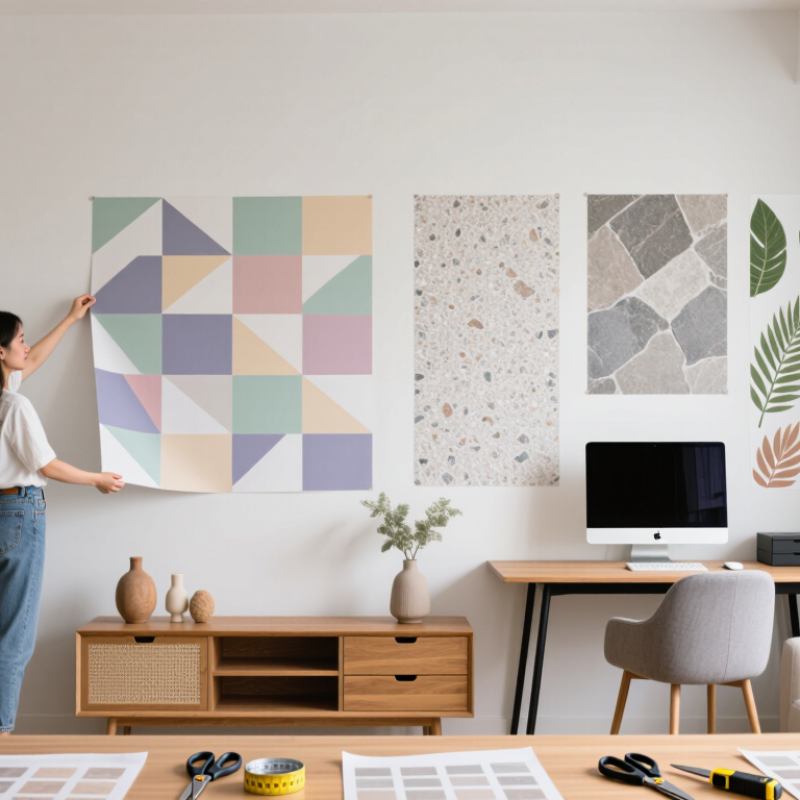
In homes, rented apartments, and small retail spaces, a wall can feel dated long before it needs major renovation. Pvc Wall Stickers offer a practical way to add color, pattern, or a stone-like finish without replacing the surface. Buyers can compare designs, cut a sheet around a switch, and update a plain wall in an afternoon. Small changes matter.

The wider wall-covering market provides useful context. Grand View Research’s Wall Covering Market Size, Share & Trends Analysis Report estimated the global market at USD 39.4 billion in 2022 and projected a 4.7% compound annual growth rate from 2023 to 2030. This category includes many products, not just PVC stickers, so the figures should not be treated as sticker sales data. Still, they point to sustained interest in decorative wall finishes.

Popularity also comes down to everyday trade-offs. PVC stickers are generally lightweight, available in many patterns, and easier to install than traditional wall treatments. A geometric accent behind a desk or a washable-looking backsplash effect can refresh a room with limited effort. But results depend on the wall: dust, rough texture, and moisture can weaken adhesion, while removal may affect delicate paint. That part is easy to overlook. Buyers should check product instructions, measure carefully, and test a small area when possible. Their appeal is real, but no finish works perfectly on every surface.
Why Are PVC Wall Stickers a Popular Choice for Buyers?

What Are PVC Wall Stickers?

PVC wall stickers are decorative sheets made from polyvinyl chloride, a flexible plastic that can hold printed patterns, colors, or protective finishes. Most have an adhesive layer on the back, so they attach directly to a wall without paste. Some are cut into small shapes; others arrive as larger panels with repeating designs. That matters. A small sticker can highlight a doorway, while a panel can cover a wider area.

In practical use, the wall surface often matters more than the design. A clean, dry, smooth wall usually gives the adhesive a better chance to hold evenly. Dust, textured paint, or moisture may cause edges to lift. Not every wall. Check the product instructions and test a small, hidden spot before applying a large piece. Press the sticker from the center outward, smoothing bubbles with a soft cloth or card. PVC can resist everyday splashes, but that does not guarantee every sticker suits a steamy bathroom or a frequently scrubbed surface. Removal also varies: some adhesives peel away more easily than others, and paint can sometimes lift with them. It is a convenient option, but not a flawless one.
How Are PVC Wall Stickers Made and Designed?

PVC wall stickers are commonly made from thin vinyl film, though the exact material and process can vary. A design is prepared digitally, with colors and shapes adjusted for the intended wall size. The image may be printed onto the film, then protected with a clear coating to help resist scuffs and light moisture. Not every sticker gets the same finish.

An adhesive layer is applied to the back, which is covered by a release liner until installation. Machines can cut the printed sheet into lettering, borders, or small decorative shapes. Clean edges matter. A poorly calibrated cut may leave tiny tabs that are difficult to peel away. For that reason, production samples are often checked before a full run.

Designers also consider how the sticker will look in a real room, not just on a screen. Matte finishes can reduce glare near a bright window, while glossy surfaces may make colors appear more vivid. Pale designs can disappear on light paint, so contrast should be tested against the actual wall color. Buyers can request a sample or test one corner first. Wall texture, dust, and paint condition affect adhesion, and results may differ from room to room.

Why Are PVC Wall Stickers a Popular Choice for Buyers? - How Are PVC Wall Stickers Made and Designed?
Dimension Typical Information Why It Matters to Buyers How It Influences Making and Design
Material PVC wall stickers are made from flexible polyvinyl chloride film with a pressure-sensitive adhesive on the back. Film formulations and constructions vary by product. The flexible film can conform to many smooth, flat surfaces and supports a wide range of printed colors and shapes. Manufacturers select a film and adhesive combination suited to the intended surface and use, then convert the material into printable or cuttable sheets or rolls.
Surface compatibility They generally adhere best to clean, dry, smooth surfaces such as painted walls, glass, or finished panels. Rough, dusty, damp, or freshly painted surfaces can reduce adhesion. Checking the wall condition before purchase and installation helps reduce lifting, bubbles, and poor adhesion. Designs may be supplied as individual decals, grouped motifs, or larger panels. Product instructions should specify suitable surfaces and any paint-curing wait time.
Water and cleaning PVC film is moisture-resistant, but water resistance of the finished sticker depends on the ink, surface coating, adhesive, seams, and installation. This can make some products suitable for light cleaning, but it does not make every wall sticker waterproof or appropriate for constant exposure to water. For products intended to be wiped, manufacturers may use compatible inks and a protective coating or laminate. Care instructions should match the finished construction.
Print and appearance Depending on the film and printing method, PVC stickers can carry solid colors, illustrations, patterns, or photographic images. Printed designs offer many options for decorating rooms without painting a full wall. Artwork is prepared digitally, checked for color and scale, and printed using a process compatible with the selected film. A test print may be used to review appearance.
Cutting and shape Stickers can be cut into letters, icons, borders, or custom outlines. Printed designs may also be contour-cut around their artwork. Different cut styles let buyers choose between individual shapes and ready-to-position panels. Design files define the cut paths. A plotter or other converting equipment cuts the film; excess material may be weeded away, and transfer tape may be added for some designs.
Thickness and finish Film thickness and finish vary by product; common finishes include matte and gloss. There is no single thickness or finish that applies to all PVC wall stickers. A thinner film may sit closer to the surface, while finish choice affects sheen and how the design looks under room lighting. Material specifications are selected before printing and cutting. Where needed, a compatible laminate can change the surface finish and add a protective layer.
Removability Some products use removable adhesive, but removal performance depends on the adhesive, wall paint, surface condition, time in place, and removal technique. Removable does not guarantee damage-free removal. Testing in an inconspicuous area is prudent, especially on delicate or poorly bonded paint. Adhesive choice is part of product design. Instructions may recommend slow, careful peeling and gentle warming where appropriate; users should follow the product guidance.
Typical production sequence A common workflow includes artwork preparation, film selection, printing or color-film selection, cutting, weeding where applicable, inspection, and packing. Understanding the process helps buyers compare finished products by design, material, application method, and care instructions rather than appearance alone. Exact steps vary: a solid-color decal may be cut from colored film, while a full-color design is usually printed before contour cutting and finishing.

What Features Make Them Popular With Buyers?

PVC wall stickers appeal to buyers because they add color without the weight or commitment of paint and permanent wall coverings. A small roll can cover a plain section behind a desk, while a single cut-out can brighten a child’s reading corner. Easy to handle. Many products use printed PVC film with a pressure-sensitive adhesive, so installation needs few tools. Wipe the wall, let it dry, align one edge, and smooth the film outward to reduce bubbles. Water resistance can help with light splashes, but it does not make every sticker suitable for showers or damp walls.

Material versatility also supports detailed patterns, wipeable surfaces, and custom shapes. Grand View Research valued the global PVC market at USD 45.3 billion in 2023 and projected 3.5% annual growth from 2024 to 2030. That report covers PVC across many industries, not wall stickers specifically; it signals broad material use, not proof of sticker sales. Practical limits matter. Adhesion varies with paint, texture, and humidity, and “removable” does not always mean residue-free. Buyers should check the surface guidance and test a discreet patch. A slightly crooked first edge can be frustrating, and repositioning may weaken the adhesive.

Where Are PVC Wall Stickers Commonly Used?

PVC wall stickers are commonly used on bedroom feature walls, children’s rooms, kitchen backsplashes, and rental-friendly accent areas. A small geometric panel can frame a bed; a washable-looking pattern can brighten a breakfast nook. Check the product’s cleaning guidance before placing it near sinks or stoves. Heat, steam, and uneven paint can weaken adhesion. One caution: “removable” does not always mean residue-free.

They also appear in cafés, shop displays, salons, classrooms, and temporary event spaces, where graphics can refresh plain walls without major work. The 2024 Houzz & Home Study reported a median U.S. renovation spend of $24,000 in 2023, reflecting continued investment in home updates, though it does not measure sticker purchases. The U.S. Census Bureau’s 2023 American Community Survey reported a 65.2% homeownership rate, leaving a substantial renter population for whom reversible décor may be useful. Still, test a small patch first. Wall stickers can look simple, but surface texture and humidity matter. A clean, dry wall usually gives the best result.

What Should Buyers Consider Before Choosing Them?

PVC wall stickers appeal to buyers because they can add color or cover a plain wall without major renovation. They come in many patterns, and most can be cut to fit around shelves or switches. Their convenience is real, but a low price does not guarantee a good result. Surface preparation and product quality matter.

Before choosing a design, check whether the wall is smooth, clean, and fully dry. Dust, grease, and textured paint can weaken adhesion or leave visible bubbles. Consider the room, too: heat and moisture may affect how well a sticker holds, so check the seller’s care and placement guidance. If you rent, confirm whether removal could lift paint; test a small, hidden area first. Test first. Also measure carefully. A pattern that looks balanced on a screen may feel crowded across a narrow wall. I would not overlook that detail.

Tips: Keep a spare piece for testing. Apply stickers slowly with a soft cloth, smoothing from the center outward. Avoid stretching the material, which can distort the pattern. If edges lift or bubbles remain after careful application, stop and reassess the surface rather than pressing harder. A little uncertainty is normal; the wall’s finish can change the outcome.