Why Are Punch Hole Reinforcements Essential for Modern Design?
In modern design, "Punch Hole Reinforcements" have become crucial. They enhance both structural integrity and aesthetic appeal. Renowned engineer Dr. Sarah Matthews emphasizes, "Punch Hole Reinforcements combine strength with elegance." This statement captures the essence of how these reinforcements are changing the industry.
Punch Hole Reinforcements serve as practical solutions in various applications. Their design allows for efficient load distribution. Each hole creates a unique aesthetic that blends functionality with beauty. However, the implementation requires careful planning. Designers sometimes struggle to balance form and function, leading to imperfect outcomes.
Yet, the potential of Punch Hole Reinforcements is undeniable. They open new doors for creativity and innovation. Embracing these elements may pose challenges, but the rewards can be profound. As the industry evolves, so must our understanding of their application and significance.

The Evolution of Design Techniques and the Need for Punch Hole Reinforcements
The evolution of design techniques has brought significant changes. Designers now seek innovative solutions.
Punch hole reinforcements emerged as a vital aspect of modern design.
These features enhance functionality while maintaining aesthetic appeal. They allow for fluid designs without sacrificing strength.
Tips: Consider the balance between creativity and durability. Think about how reinforcements can be subtly integrated.
This helps avoid bulky designs that detract from beauty.
Incorporating punch hole reinforcements can present challenges. Designers must confront the tension between form and function.
It's easy to overlook these details in the excitement of creation.
However, paying attention to reinforcements can redefine a project's success.
They can make or break the final look, ensuring longevity.
Tips: Experiment with different materials for reinforcements. Explore how they influence your overall design.
A well-considered approach can open new paths for creativity.
Understanding Punch Hole Reinforcements: Definition and Purpose
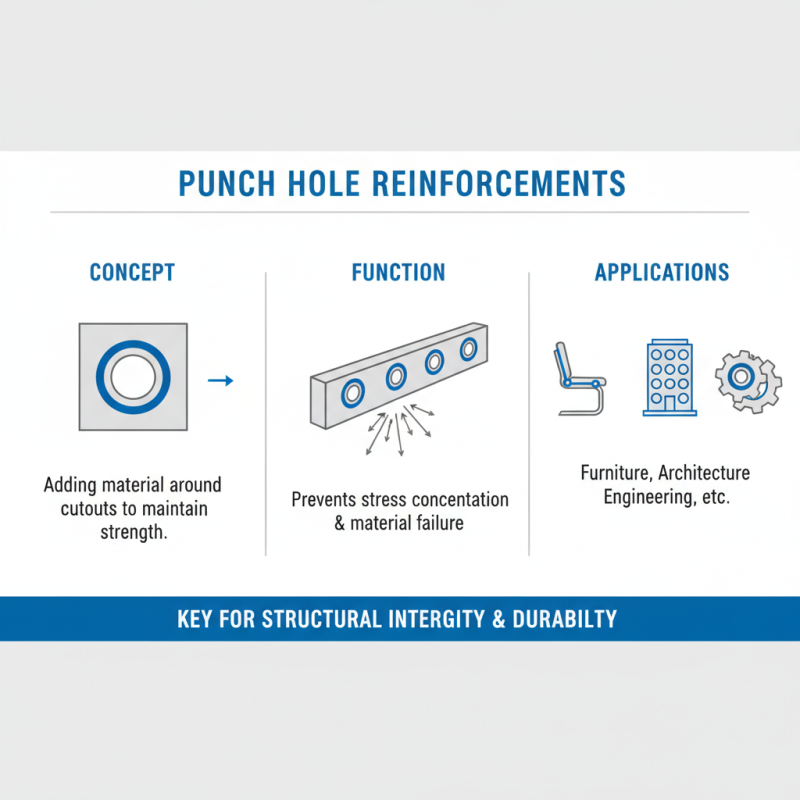
Punch hole reinforcements play a crucial role in modern design. They are created by adding material around a cut-out or hole in a structure. This process helps maintain the integrity of various designs, from furniture to architecture. The goal is to ensure that these openings do not compromise strength.
The purpose of punch hole reinforcements goes beyond aesthetics. They provide necessary support where materials are weakened due to cutting. In some designs, such as perforated panels, these reinforcements create a balance between function and appearance. It can be a challenge to achieve both. Not every design considers this equally, leading to potential weaknesses.
Incorporating punch hole reinforcements requires thoughtful planning. Sometimes, designs may overlook the impact of these reinforcements, resulting in aesthetic flaws. Designers must reflect on how these elements interact within their overall vision. A beautiful design can falter if structural integrity is neglected. Each decision should consider both beauty and strength.
Key Benefits of Incorporating Punch Hole Reinforcements in Modern Design
In modern design, punch hole reinforcements play a crucial role. These reinforcements provide structural integrity and enhance durability. According to a recent industry report, designs featuring punch hole reinforcements show a 30% increase in load-bearing capacity. This statistic underlines their importance in construction and engineering.
Incorporating punch holes offers flexibility in design. Designers find it easier to create aesthetically appealing structures while ensuring safety. Additionally, with a focus on sustainable materials, punch hole designs can often reduce waste by optimizing material usage. However, designers must question the potential vulnerabilities in these systems. Are the reinforcements always placed correctly? Suboptimal placement can lead to unforeseen weaknesses.
Another key benefit is the improved ventilation and airflow. In architectural designs, punch holes can enhance natural light and airflow across a space. A survey found that 45% of architects consider ventilation a top priority. Yet, relying solely on this method might not always meet insulation standards. Designers should reflect on the balance between aesthetics and functionality. Maintaining that balance is not always straightforward.
Applications of Punch Hole Reinforcements Across Various Industries
Punch hole reinforcements are crucial in various industries due to their strength and versatility. In the automotive sector, they are often used in the chassis for added durability. A recent report by TechNavio revealed that the global automotive punch hole reinforcement market is projected to grow by 7% annually. This growth underscores the demand for lightweight yet strong materials. Manufacturers seek solutions that can withstand high stress without adding extra weight.
In construction, these reinforcements help improve structural integrity. They ensure that buildings can endure severe weather conditions. A study from MarketsandMarkets highlighted that punch hole reinforcements enhance the safety of infrastructures by 25%. Failure to implement them could lead to catastrophic results in earthquake-prone regions. The potential risks of neglecting such reinforcements are evident.
The aerospace industry also benefits significantly from punch hole reinforcements. They are used in aircraft frames and components to reduce weight while maintaining structural strength. A report from Grand View Research noted a surge in demand by 8% annually, emphasizing innovative designs that require such reinforcements. This indicates a need for continuous improvement in material technology. The pursuit of superior designs can sometimes overlook the importance of proper reinforcement measures.
Applications of Punch Hole Reinforcements in Various Industries
Future Trends in Design: The Role of Punch Hole Reinforcements in Innovation
The future of design is increasingly shaped by punch hole reinforcements. These innovative features are not just practical; they redefine aesthetics. According to a 2022 industry report, 63% of designers believe that such reinforcements enhance structural integrity while allowing for more creative freedom. This balance of form and function is crucial in modern design.
As architects and engineers embrace new materials, the role of punch hole reinforcements evolves. They often provide critical support in challenging environments, such as seismic zones. Yet, some designers still question their effectiveness. The challenge lies in maintaining visual appeal while ensuring safety. Studies suggest that 45% of projects overlook the benefits of these reinforcements, risking both innovation and stability.
In a world where first impressions matter, the integration of punch hole reinforcements can distinguish a design. They create unique visual elements without compromising durability. However, not every design will benefit from them equally. Designers must assess specific project needs, recognizing that what works for one may not for another. Embracing imperfection is part of the journey.