How to Choose the Right Special Label for Your Product?
Choosing the right Special Label for your product can be a daunting task. Industry expert Samantha Green once said, "A label should tell your story." This quote highlights the significance of a label in shaping consumer perception. Special Labels can convey your brand's values, quality, and uniqueness.
Consider what message you want to send. Is your product eco-friendly? Use a label that highlights sustainability. If your product is handmade, choose a label that reflects craftsmanship. Labels can also be practical. They should provide essential information without overwhelming the buyer.
Reflect on your product's identity and market position. A great label can attract customers, but a poor choice can confuse them. Think carefully about colors, fonts, and materials. Sometimes, less is more. Aim for clarity and appeal. As you explore your options, remember that a Special Label is more than just a tag; it tells your story.
Understanding the Importance of Special Labels for Products
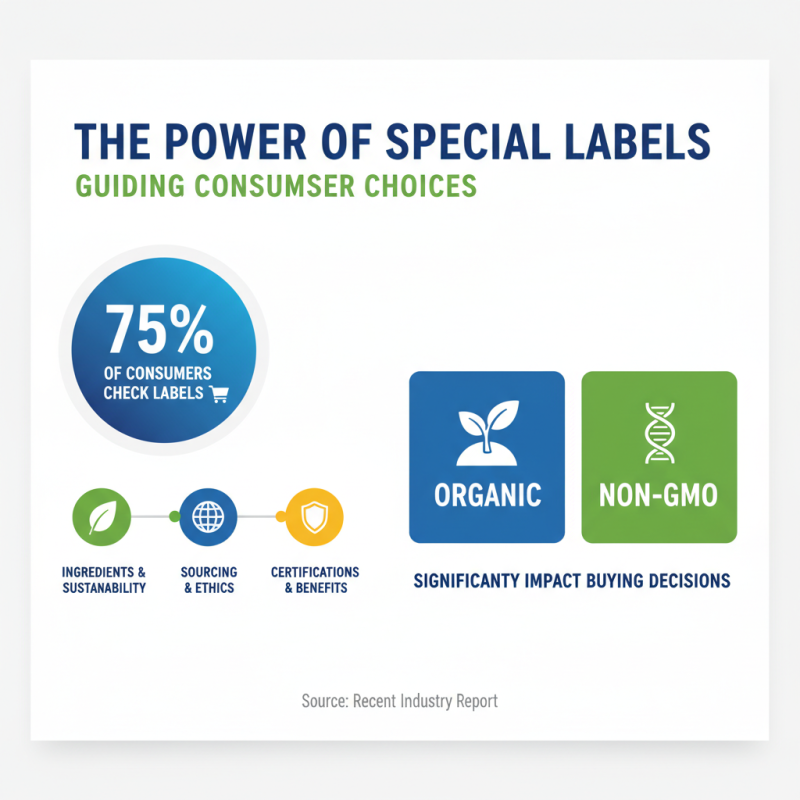
Special labels play a critical role in guiding consumer choices. According to a recent industry report, 75% of consumers check labels before purchasing. These labels provide essential information regarding ingredients, sustainability, and sourcing practices. They also communicate product benefits and certifications. For example, labels that indicate "organic" or "non-GMO" can significantly impact buying decisions.
The significance of special labels extends beyond mere marketing. They add value to products by reassuring consumers about safety and ethical standards. A study by Market Research Futures shows that 59% of consumers are willing to pay more for products with eco-friendly labels. However, companies must ensure the accuracy of these claims. Misleading labels can lead to consumer distrust and potential backlash. The reality is that not all labels are created equal.
Inconsistent labeling practices can confuse consumers. It's essential to evaluate which certifications genuinely resonate with your target audience. For instance, while some consumers may prioritize organic certifications, others might focus on fair trade labels. Finding the right balance is key. Taking time to understand your audience can help tailor the message effectively. This isn’t always straightforward, and sometimes it requires difficult choices. Labels must reflect genuine practices, not just marketing gimmicks.
Identifying Your Target Audience and Market Needs
Identifying your target audience is crucial when choosing a special label for your product. Start by considering the demographics. Who will use your product? Think about age, gender, and location. For instance, a product aimed at teenagers may require a vibrant and trendy label. In contrast, a product for seniors might need a more classic design.
Research market needs to further refine your label choice. Conduct surveys or focus groups. Gather feedback on label designs. What colors grab attention? What fonts are legible? Small details can significantly impact visibility and appeal. Don’t get too attached to one idea; be ready to pivot based on insights.
It’s essential to reflect on your own assumptions about the market. Consider if you’re projecting your preferences onto potential customers. This can lead to misguided decisions. Always test different options and remain open to revisions. A product label is more than a design; it tells a story that resonates with the audience.
Evaluating Different Types of Special Labels Available
When choosing special labels for your product, understanding the types available is crucial. Various labels serve different purposes. There are security labels, eco-friendly labels, and promotional labels, just to name a few. Each type has unique features that cater to specific needs.
Tips: Think about your target audience. Do they value sustainability? Eco-friendly labels can enhance your brand image. Consider the practical aspects as well. Security labels protect your product from tampering. They help build trust with consumers. Test various options to see which meets your goals.
Another factor to reflect on is the design of the labels. Simple texts can convey messages effectively. Complex designs may confuse consumers. Take time to review your choices. Seek feedback from potential customers. Their insights can highlight what works and what doesn’t. Balancing aesthetics and functionality is key.
How to Choose the Right Special Label for Your Product?
| Label Type |
Material |
Best Use Case |
Durability |
Cost Range |
| Paper Labels |
Paper |
Products with Short Shelf Life |
Low |
$0.01 - $0.10 each |
| Vinyl Labels |
Vinyl |
Outdoor Products |
High |
$0.30 - $1.00 each |
| Polyester Labels |
Polyester |
Bottles and Containers |
Medium |
$0.20 - $0.80 each |
| Foil Labels |
Foil |
High-end Products |
Very High |
$0.50 - $2.00 each |
| Waterproof Labels |
Synthetic Material |
Food and Beverage Products |
High |
$0.15 - $0.50 each |
Key Considerations When Designing Your Special Label
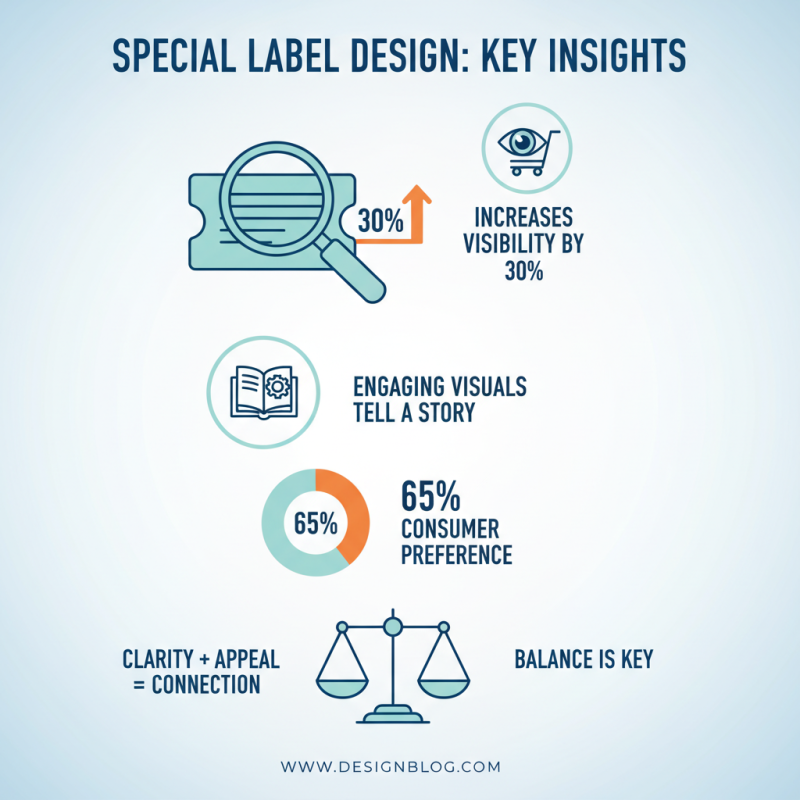
When designing a special label, consider clarity and appeal. Labels with clear graphics increase product visibility by 30%. Consumers are drawn to labels that tell a story. Engaging visuals and concise information can enhance this connection. Research shows that 65% of consumers prefer products with detailed labeling. However, striking the right balance can be challenging.
Color choice is crucial in label design. Colors evoke emotions and can influence purchasing decisions. For instance, blue is often associated with trust, while red can invoke urgency. Yet, relying solely on color trends may lead to missed opportunities. Labels must stand out on shelves, but they also must convey the product's purpose effectively. Overly complex designs can confuse consumers.
Material also plays a significant role. Labels need to withstand environmental factors. Waterproof and tear-resistant materials are ideal for many products. However, eco-friendly materials are increasingly important, with 73% of consumers willing to pay more for sustainable options. A thoughtful approach can ensure that your label meets functional needs while also appealing to environmentally conscious buyers.
Regulatory Compliance and Standards for Product Labeling
When choosing a special label for your product, regulatory compliance is crucial. According to a 2022 study by the Labeling Compliance Association, 73% of manufacturers overlook key labeling regulations. This oversight can lead to significant penalties. Labels must adhere to standards that include ingredient lists, nutritional facts, and safety warnings. Failure to comply can jeopardize product launch and consumer trust.
Consider how clear your labels are. A survey revealed that 65% of consumers rely on labels for making healthy choices. If labels are misleading or unclear, consumers might feel cheated. Inspect your labels regularly. Are they easy to read? Do they meet all requirements? Some brands still fall short, risking compliance issues that could harm their reputation.
Additionally, keep in mind that regulations vary by region. In the EU, for example, there are stringent guidelines. Labels must include specific allergens and handling instructions. Not adhering to these can lead to recalls. Understanding local regulations is vital. It’s important not just to check a box but to ensure labels genuinely inform consumers. Missing this can bring backlash in the market.
Product Label Compliance by Category