2026 How to Choose the Right Printer Direct Thermal for Your Needs?
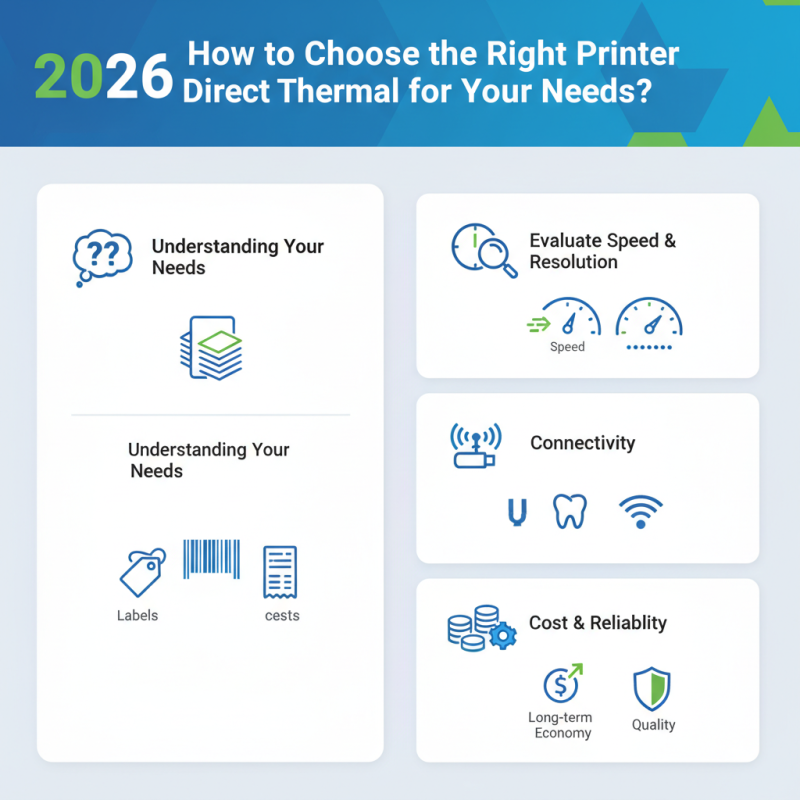
Choosing the right Printer Direct Thermal can feel overwhelming. With numerous options available, each boasting unique features, the decision process becomes complicated. Understanding your needs is crucial. Consider what you will print. Labels, barcodes, or receipts all demand different specifications.
Evaluate the printing speed and resolution. For high-volume tasks, speed is essential. High resolution is necessary for detailed graphics. Think about connectivity too. Will you connect via USB, Bluetooth, or Wi-Fi? Each method has its advantages and drawbacks.
Don’t overlook the cost of consumables. Printer Direct Thermal supplies vary in price. Some are more economical in the long run. Measure the reliability of the printer as well. Sometimes, users overlook quality in favor of price. Reflect on these factors before making a decision. This choice may significantly impact your workflow.
Understanding Direct Thermal Printing Technology and Its Applications
Direct thermal printing technology uses heat to produce images on specially coated paper. This method eliminates the need for ink or toner, which can be appealing for many. It offers a cleaner, simpler solution for various printing tasks. However, the print quality may fade over time, especially under direct sunlight or heat.
In practical applications, this technology shines in labeling, ticketing, and shipping. Businesses appreciate the quick printing speed and low maintenance. Yet, users must choose suitable materials, as not all direct thermal papers are created equal. Some may not withstand humidity or exposure to chemicals. This inconsistency can lead to frustrating instances of unreadable labels.
While the efficiency of direct thermal printers is undeniable, it's essential to consider their lifespan. The print head's durability is crucial for long-term use. Also, users should reflect on specific needs. For temporary labels, these printers are fantastic. For permanent solutions, alternatives might be better. Balancing these factors can lead to a more informed decision.
Key Factors to Consider When Selecting a Direct Thermal Printer
When selecting a direct thermal printer, several key factors should guide your decision. The print specification is vital. Look for printers that offer a resolution of at least 203 dpi, as this standard ensures clarity. Studies show that a 600 dpi resolution can significantly improve print quality in barcode applications.
Speed is another important consideration. Many businesses prefer printers that can produce labels at a speed of 4 to 6 inches per second. This rate enhances productivity in high-volume environments. However, some models struggle with consistency at such speeds, leading to frequent paper jams or misprinting.
Compatibility with various media formats is crucial. A printer that supports multiple label sizes and types increases versatility. It's essential to consider future needs, as businesses often expand their label requirements. Despite their advantages, some users find that entry-level models may lack durability over time. This dissatisfaction often stems from cost-cutting on materials used in construction, leading to unexpected replacements.
Comparing Speed, Resolution, and Cost of Direct Thermal Printers
When considering a direct thermal printer, speed is a key factor. A printer that produces labels quickly can boost productivity. For high-volume printing tasks, look for printers that can handle at least 150mm per second. Slower models might frustrate staff, but sometimes, slower printing can improve precision. Evaluate your workflow and consider the balance between speed and accuracy.
Resolution is another important aspect. A higher resolution means clearer and more detailed prints. Standard resolutions range from 200 to 300 dpi. If you print barcodes or intricate graphics, choose a printer with at least 300 dpi. However, higher resolutions may slow down printing speed or increase costs. Reflect on what details matter most for your labels, and select a suitable resolution.
Cost is the final consideration. Direct thermal printers can vary widely in price. Budget options may work for small operations, but they might lack features. Investing in a more expensive model could save you money in maintenance and supplies over time. Think about your long-term needs. Finding the right balance among speed, resolution, and cost is crucial for making a wise choice.
Assessing the Right Media Types for Your Direct Thermal Printing Needs
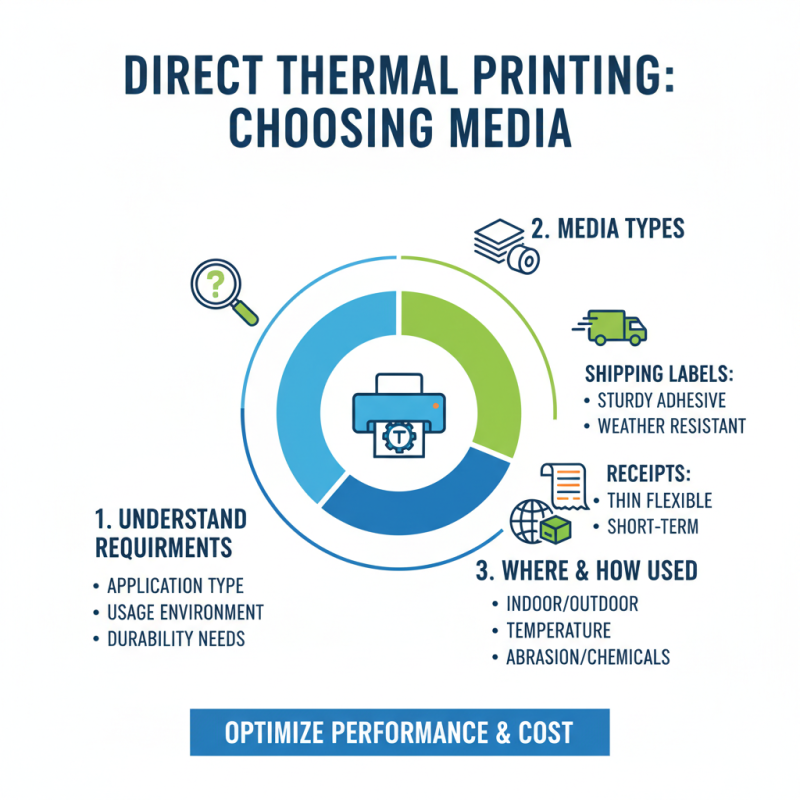
Choosing the right media types for direct thermal printing is crucial. It starts with understanding your printing requirements. Different applications demand different media. For example, shipping labels often require sturdy, adhesive materials. Meanwhile, receipts might need thinner, more flexible options. Always consider where and how the labels will be used.
Humidity and temperature impact media performance. Some materials may fade or smudge in challenging conditions. Think about the environment. Are you printing in a heated warehouse or a cool office? Also, not all media types work with every printer. If you have a specific printer model, check its compatibility with various media. It can be frustrating to invest in a printer only to find out it can't handle your preferred label type.
Trial and error can be part of the process. You may buy a set of media that seems perfect but isn’t. Analyzing results is key. If something doesn't work as expected, reflecting on why will help. Perhaps it’s a matter of environmental factors or the wrong media choice. Adjust accordingly, and soon you’ll find the right match for your direct thermal printing needs.