Discover the Best Sticky Printer Labels in China for Your Needs?
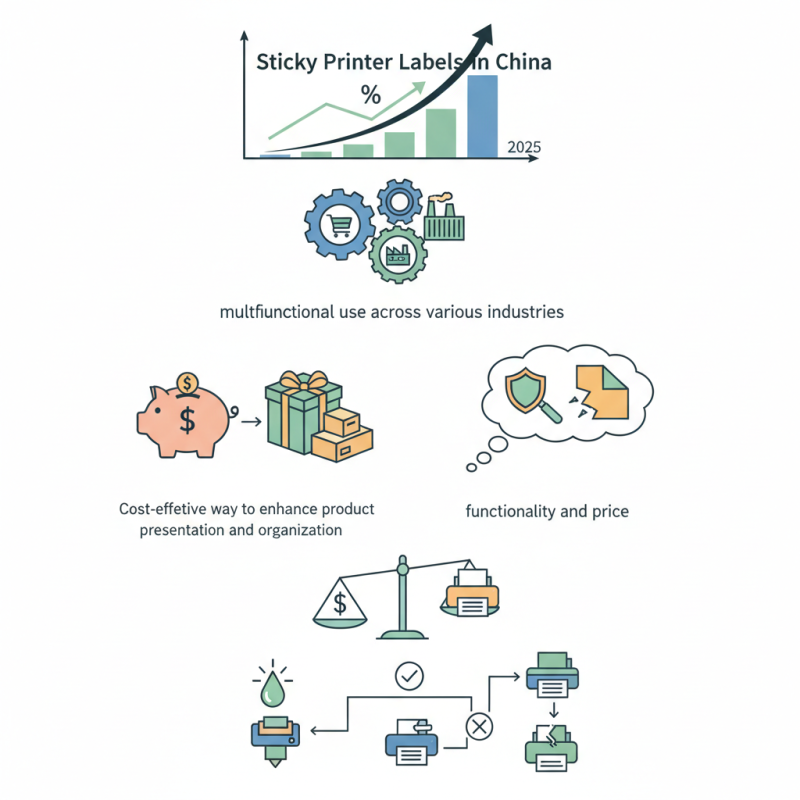
In the realm of labeling solutions, "Sticky Printer Labels" have gained significant traction in China. According to a report by Market Insights, the demand for these labels is projected to grow by 8.5% annually through 2025. Their multifunctional use across various industries highlights their importance. For small businesses, these labels offer a cost-effective way to enhance product presentation and organization.
Industry expert Dr. Jin Wei emphasizes, “Quality is crucial when selecting Sticky Printer Labels. A label’s durability impacts brand perception.” His insight reflects the necessity for reliable products in today’s competitive market. Many users still struggle to find options that strike the right balance between functionality and price.
While advances in printing technology have improved label quality, some brands still fall short, leading to frustration. The process of choosing the right labels requires careful consideration. Users must evaluate what fits their specific needs, focusing on factors like adhesive strength and compatibility with printers. There’s much to unpack in this evolving industry.
Understanding the Importance of Sticky Printer Labels
Sticky printer labels play a crucial role in various industries. They offer organization and efficiency in labeling. According to a recent report by Smithers Pira, the global label market was valued at over $49 billion in 2021. This growth reflects the increasing demand for effective labeling solutions across sectors including retail, logistics, and healthcare.
The importance of sticky printer labels extends beyond mere identification. They enhance branding efforts and improve inventory tracking. Research indicates that 70% of companies see improved operational efficiency with effective labeling systems. However, the selection of appropriate labels can be overwhelming. Many users struggle to find the right materials or adhesive strength for specific tasks.
Quality matters. Unreliable labels can lead to misidentification or product damage. A study highlighted that nearly 20% of label-related issues arise from poor adhesive choices. As businesses prioritize efficiency, understanding the nuances of sticky printer labels becomes essential. Balancing functionality and cost is necessary but often overlooked. Making informed decisions can lead to significant improvements in workflow and customer satisfaction.
Discover the Best Sticky Printer Labels in China for Your Needs
| Label Type |
Material |
Size (mm) |
Adhesive Type |
Print Compatibility |
Average Price (CNY) |
| Address Labels |
Paper |
100 x 150 |
Permanent |
Inkjet, Laser |
150 |
| Shipping Labels |
Polyester |
80 x 50 |
Removable |
Thermal Transfer |
200 |
| Product Labels |
Vinyl |
50 x 75 |
Permanent |
Inkjet, Laser |
180 |
| Food Labels |
Waterproof Paper |
60 x 100 |
Food Safe Permanent |
Inkjet |
220 |
| Barcode Labels |
Paper |
25 x 15 |
Permanent |
Thermal Transfer |
120 |
Key Features to Look for in Sticky Printer Labels
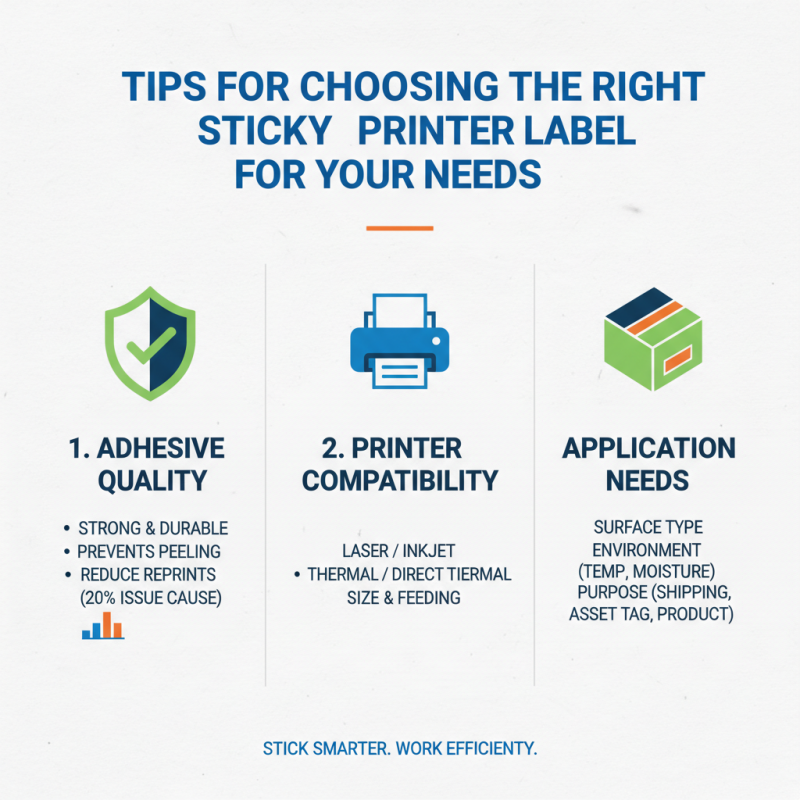
When selecting sticky printer labels, key features play a significant role. First, consider the adhesive quality. Labels with strong, durable adhesive ensure they stick well and last longer. A survey by the Label Manufacturers Association revealed that 70% of consumers prioritize adhesion when choosing labels. This durability is particularly important for products exposed to varying conditions.
Another feature to assess is the printing compatibility. Labels should work seamlessly with various printers. Many users report issues with labels jamming or smudging when using incompatible printers. It's wise to check specifications or conduct tests before bulk purchases.
Tips: Always identify the label's intended application. For instance, waterproof labels are essential if products encounter moisture. Research potential label materials such as vinyl or paper, as they affect durability and print quality. Avoid purchasing labels in bulk without samples. Testing a few first can help prevent unsatisfactory results later.
Lastly, consider the size and shape options. A one-size-fits-all approach rarely fits every business need. Some industries require unique label sizes to fit specific packaging. Ultimately, knowing your requirements can minimize wasted resources and enhance efficiency.
Top Brands of Sticky Printer Labels in China
When searching for sticky printer labels in China, it's essential to consider the top brands available. According to the China Labeling Industry Report 2023, the market has shown a steady growth rate of around 7% annually. A few top contenders include some local and international brands that dominate both quality and affordability.
These brands often focus on versatility. Labels can be used for shipping, labeling products, or organizing home offices. Many labels offer water resistance and excellent adhesive properties. However, finding the right label might be challenging due to the vast array of choices. Some users reported that certain labels may not stick well in humid conditions.
For optimal label selection, consider your application and materials needed. Test a few samples before bulk ordering. It's essential to ensure compatibility with your printer to avoid frustrating jams. Additionally, check user reviews and choose labels that the community finds reliable and effective. Quality matters, but so does cost. Balancing these factors will help you find the best sticky printer labels in China for your specific needs.
Comparative Analysis of Popular Sticky Printer Labels
When selecting sticky printer labels, understanding the options available is essential. In China, the market for sticky labels has grown significantly. A 2023 report by Statista shows that the label market is expected to reach over $3 billion this year. This growth indicates a strong demand for quality products.
One popular category includes thermal labels. These labels are favored for their efficiency. Research indicates that thermal labels have a higher printing speed, making them suitable for high-volume tasks. However, users often find that the durability of thermal labels can be lacking, especially in humid conditions.
Another option is the adhesive paper labels. They come in various finishes, including matte and glossy. According to industry surveys, users appreciate the versatility of adhesive paper labels. Yet, some users note that adhesive strength can vary, leading to issues in specific applications. It's crucial to evaluate these aspects based on individual usage to avoid disappointment.
Tips for Choosing the Right Sticky Printer Label for Your Needs
When selecting sticky printer labels, consider various factors to ensure they meet your specific needs. The label’s adhesive quality is essential. High-quality adhesive ensures labels stick well and do not peel off easily. Reports indicate that adhesive failures account for 20% of label issues. This can lead to costly reprints and lost efficiency.
Another important aspect is the material of the label. Labels come in different materials such as paper, plastic, and synthetic variants. Paper labels are often cost-effective for temporary use. In contrast, synthetic labels provide longer durability and are resistant to moisture, making them suitable for shipping purposes. More than 35% of businesses prefer synthetic labels for their resilience.
When it comes to size and shape, think about your application. A label that is too small may not convey essential information. On the other hand, an oversized label can look unprofessional and cluttered. Custom-sized labels can be beneficial, but they may require higher up-front costs. Balancing cost with functionality is key. Prioritize your needs and assess the potential gaps in your initial choices. This reflective approach will guide you to the best sticky printer labels that serve your unique demands.