Top Benefits of Sticky Printer Labels for Your Business Needs?
In the competitive business landscape, efficiency is crucial. Sticky Printer Labels serve as a powerful tool for brands aiming to streamline their operations. According to a report published by Smithers Pira, the global market for label production is expected to reach $50 billion by 2025. This highlights the growing reliance on effective labeling solutions, including sticky options.
Sticky Printer Labels are not just practical; they enhance branding efforts. A well-designed label attracts customers' attention on retail shelves. A study by Nielsen found that 67% of consumers are influenced by product packaging. This statistic underscores the importance of using high-quality labels that resonate with target audiences.
Moreover, sticky labels minimize the chances of mislabeling products, reducing costly errors. A survey by the Label Manufacturers Association indicates that businesses lose around $1 million annually due to labeling mistakes. While their benefits are clear, some companies still underestimate the impact of investing in professional sticky labels. This calls for a deeper reflection on how effective labels can transform business operations and customer perceptions.
Top Benefits of Sticky Printer Labels for Your Business Needs
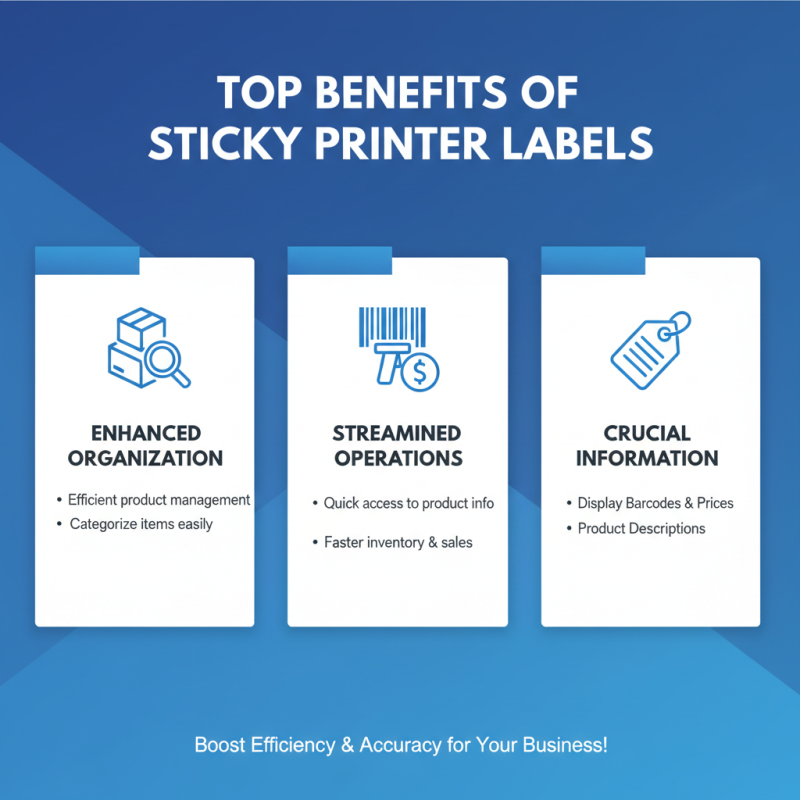
Sticky printer labels can significantly enhance your business operations. They offer an efficient way to organize and manage products. Labels can include crucial information like barcodes, prices, and product descriptions. This accessibility helps streamline processes in storage and sales.
Using sticky labels also improves branding. When products are labeled consistently, customers recognize your brand. It's a visual representation of professionalism and quality. However, the label design must be carefully considered. Poorly designed labels can confuse customers and undermine your image.
Moreover, sticky labels can be a cost-effective solution for small businesses. They reduce the reliance on pre-printed labels, which can become obsolete. Yet, relying solely on sticky labels may lead to inconsistencies. Businesses should regularly review and update their labeling strategies to maintain effectiveness. Finding the right balance is key.
Enhanced Shipping Efficiency with Adhesive Label Solutions
Adhesive labels have revolutionized shipping efficiency for businesses. Properly utilized, these labels streamline logistics and save valuable time. According to a report by the Data-driven Logistics Association, about 30% of all shipping errors are due to label-related issues. By using high-quality sticky printer labels, businesses minimize these errors. Precise barcodes and clear addresses improve the accuracy of package handling.
In addition, these labels enhance sorting processes. The use of adhesive labels can speed up the packing and shipping process by 25%. Employees can quickly scan these labels, reducing the time spent on each package. However, not every organization has adopted this solution. Some still rely on outdated methods like handwriting, which can lead to confusion.
Moreover, consistent use of sticky labels improves branding. Custom labels can promote a professional image. They communicate critical information quickly and clearly. However, it's crucial to choose the right material for different shipping environments. Labels may not adhere well in extreme temperatures. Businesses must test their labels to ensure reliability in their specific conditions.
Top Benefits of Sticky Printer Labels for Your Business Needs
This chart illustrates the key benefits of using sticky printer labels in enhancing shipping efficiency for businesses.
Cost-Effective Branding through Customizable Label Designs
Customizable label designs can significantly enhance your branding efforts. According to a study by the ACSI, 70% of consumers feel more connected to brands that use consistent visual elements. Sticky printer labels enable businesses to create tailored designs that reflect their unique identity. This can range from logo placements to color schemes that align with brand aesthetics. A compelling label can attract attention and forge a lasting impression, impacting consumer choices.
Cost-effectiveness is another key advantage. Research from the Label Manufacturers Association (LMA) indicates that businesses investing in custom labeling see an ROI of up to 25%. This is especially true for small and medium enterprises (SMEs). Local businesses with unique labels report increased sales and customer loyalty. However, many companies overlook the potential of labels as a marketing tool. Often, they treat labeling as a mere functional requirement rather than an opportunity for branding. This complacency can lead to missed opportunities for engagement and market differentiation.
Top Benefits of Sticky Printer Labels for Your Business Needs
| Benefit |
Description |
Impact on Business |
| Cost-Effective Branding |
Customizable labels allow for scalable branding without the need for expensive printing solutions. |
Increases brand visibility and recognition while saving on marketing budgets. |
| Versatility |
Sticky labels can be used on various surfaces and for diverse applications. |
Enhances operational flexibility by catering to multiple labeling needs. |
| Time Efficiency |
Quick and easy application to products or packaging. |
Reduces labeling time, allowing for faster production processes. |
| Enhanced Product Information |
Labels can include detailed product information like ingredients, instructions, and expiry dates. |
Improves customer satisfaction and compliance with regulations. |
| Custom Design Options |
Ability to create unique designs that reflect brand identity. |
Strengthens brand loyalty through personalized customer engagement. |
Increased Compliance and Inventory Accuracy with Printed Labels
Printed labels are vital for businesses seeking enhanced compliance and inventory accuracy. Data from the American National Standards Institute indicates that accurate labeling can reduce inventory discrepancies by up to 30%. This improvement can significantly enhance operational efficiency.
Using sticky printer labels supports better tracking of inventory. Each item can be labeled with specific data, reducing the chances of error. A report from the International Organization for Standardization highlights that organizations using clearly printed labels have 40% fewer misplacements. However, many businesses overlook the importance of consistent label updates.
In industries like logistics and manufacturing, mislabeled products can lead to costly errors. A survey by the Supply Chain Management Review found that 45% of companies experienced losses due to poor labeling practices. This statistic shows the critical need for reliable labels. While some businesses have improved their labeling processes, not all take full advantage of technology. Printing labels that meet industry standards can be a challenge. Regular reviews of labeling practices could prevent unnecessary setbacks.